
.|

NEWS
A variety of immigration, business and general news articles taken from New Zealand newspapers, websites and other sources (sources are mentioned at the bottom of each article) and selected by Terra Nova Consultancy Ltd. It may assist the reader being more or less up-to-date what is happening in Aotearoa, "the Land of the Long White Cloud". Happy reading, enjoy ... and if you have any questions on these updates - please contact us...
Newest article always on top.
24/04/20 - More people make the case for rich investors coming to NZ
Rich overseas investors could inject much-needed private capital into the economy in exchange for a safe haven from coronavirus, according to an expert in entrepreneurship.
The Times in London suggests rich Americans are turning to New Zealand for sanctuary during the Covid-19 pandemic.
A lecturer in Entrepreneurship and Strategic Management at the University of Otago, Tadhg Ryan-Charleton, said that could be turned to our advantage.
"I do think it's a promising idea because for many new and small businesses, at the very early stages - before you really get to a stage where traditional lenders become part of the conversation - you really are reliant on private capital," he said.
Peter Thiel was awarded citizenship after spending just 12 days in New Zealand.
"Private capital is individual business investors or else a venture capital firm - that doesn't exist in this country to the same degree as it does in other areas."
New Zealand entrepreneurs come up with great ideas full of technical know-how but their ideas do not always reach their potential because of the lack of investment capital, he said.
"I do think there will be advantages if we could find a way in the current climate, to perhaps fast-track private capital into these ecosystems.
"But there are drawbacks and there are things to be very aware of. When we are perhaps touting residency or some kind of visa in exchange for capital, we have to be very careful that we're getting the right type of investors."
That would mean encouraging investors who were willing to work with start-ups and small businesses, he said, rather than trying to use their overseas experience as a guide in a New Zealand context.
They would also need a long investment horizon as companies could otherwise feel pushed into accepting the first offer to be bought out.
"We want people who are in this for the good of the businesses that they're investing in and for the good of the founders and the entrepreneurs who will become their partners," he said.
"We don't really want to frame this as a two or three-year investment, as a quick fix or a quick trade for a visa. We do want the right type of people and I think that's important.
"I wouldn't see it myself as visas to the highest bidder - I think we're thinking about what does our economy need at the moment and private capital and support for new and small businesses, it has to be pretty high on that list."
The co-founder of PayPal, Peter Thiel, was controversially awarded citizenship in 2011 after spending 12 days in the country.
New Zealand has since been linked with other rich foreigners seeking a bolthole from toxic political and environmental crises in their home countries.
The Association for Migration and Investment said New Zealand was already an attractive emigration option, and that had only increased after the country's success in curbing the march of Covid-19.
"The government needs to be seriously looking at attracting investors into this country because we are going to need injection of funds," said its chair June Ranson.
"The prime minister was actually asked about this and she said it was only just buying a passport. It's not just buying a passport, these people and the injection of their money in this country actually helps to create jobs.
(Source: NZ Herald, Gill Bonnett of RNZ )
21/04/20 - Barry Soper on Covid 19 coronavirus lockdown: This Government isn't business savvy
COMMENT
It was a victory for bureaucracy over business.
Jacinda Ardern said as much when announcing the lockdown would be extended until midnight next Monday. It was an action, she said, recommended by the Director- General of Health Ashley Bloomfield.
The Prime Minister then went on to show this Government isn't business savvy. Not one of the people on the Covid Response Cabinet Committee has ever run a business - and it shows.
Ardern said the action would extend the lockdown for just two business days, this Thursday and Friday, because Monday is Anzac Day. Surely she can't really believe that business only operates from Monday through Friday.
What the Government's decision has done is to close the door for at least five days to around 300,000 workers - that's if those doors are still able to be opened at the end of it.
Ardern's talked about level 3 - which we will move to next Tuesday - allowing more business activity but not social activity. The bubbles will be expected to be maintained now for another three weeks, when it'll be reviewed.
In truth this extension is all about keeping people locked up over the Anzac weekend.
Even though Ardern talks about how well we've all done, how we can pat ourselves on the back for stopping a wave of devastation that would have inevitably, in her view, occurred, it seems we can't be trusted.
Level 3, she admits, requires more trust, taking responsibility for ourselves and doing the right thing.
It's been obvious for several days that level 4 was going to be with us for longer. Bloomfield talked about his ministry being on a pathway to a gold-standard contact- tracing system, which he said was essential to come out of lockdown.
He said tracing down 80 per cent of close contacts to virus carriers within three days could be achieved within the next week.
A member of that Cabinet Covid team is of course Winston Peters, who has been putting out some confusing messages over the past few days.
He will now no doubt claim we could have been incarcerated for longer without his intervention.
Covid-19 in NZ — Monday 20th April Total confirmed and probable cases
Peters told us at the weekend there is "no value" in trying to save people who have coronavirus if it means greater social damage is caused. We need to save our economy as fast as we can before further damage is caused, he said, adding the secret is we keep a sense of balance.
He rightfully talked about all sorts of things like depression, suicide, domestic violence and a whole lot of other social issues that cause far greater social damage.
"In the end the only thing that's going to save lives isn't just medical expertise - but an economy that's capable of providing the utilities to face the crisis."
He also hit back at those who say alert level 3 isn't much different to level 4.
Recently, National's Judith Collins said level 3 is just like level 4 but with KFC.
"It's sad people have to get political in times like this," he said.
Now that is the pot calling the kettle black.
(Source: NZ Herald, Barry Soper)
OUR COMMENTS
According to Belgian virologist Guido Vanham, the former head of virology at the Institute for Tropical Medicine in Antwerp, Belgium, he states in his article dated 6 April 2020 - How will the COVID-19 pandemic end? A virologist explains | World Economic Foru - the following;
"It (COVID 19) will probably never end, in the sense that this virus is clearly here to stay unless we eradicate it. And the only way to eradicate such a virus would be with a very effective vaccine that is delivered to every human being. We have done that with smallpox, but that's the only example - and that has taken many years."
"So it will most probably stay. It belongs to a family of viruses that we know - the coronaviruses - and one of the questions now is whether it will behave like those other viruses."
I therefore support the move back to level 3 but with much more flexibility than is now going to happen. I fuly agree with Winston Peters sattement above, we need to get the economy going for the sake of the community, wellbeing and health.
21/04/20 - Business activities under COVID 19 level 3
Many may ask what business activitese are allowed under level 3 COVID 19. Please find herewith a comprehensive pdf that outlines the business activities permitted.
15/04/20 - Coronavirus: Splashing out, then slowing down - what the post-lockdown retail climate will be like
Walking through any of New Zealand's city centres is an eerie experience during the country's month-long lockdown; empty streets, shuttered stores and overgrown green spaces.
On Wellington's Cuba Street, lined with iconic eateries, chairs are stacked on cafe tables and neglected plants are yellowed and bent.
With almost half of the country's workforce of 2.5 million people sitting idle at home as part of the effort to curb the spread of the coronavirus, it's difficult to imagine a return to pre-lockdown times.
Dedicating to going – in Prime Minister Jacinda Ardern's words – "hard and early" against Covid-19, New Zealand will hopefully avoid the exponential growth in cases experienced by other countries. However, it's unlikely to also escape the changed reality to come, socially and economically.
It remains unclear when many businesses will be able to resume trading, or what that might look like. Regardless, many Kiwis are counting down the days until they can get their hair cut, restock their liquor cabinet, visit a local cafe, or buy a burger.
Retailers can certainly expect to see a post-lockdown "relief bounce", experts say. But the bad news is it won't last, and the high street will be struggle street for some time to come.
In short, The overwhelming toll on jobs and businesses has only just begun.
Retail New Zealand chief executive Greg Harford expects there will be significant pent-up demand, benefiting hairdressers, pet groomers, hardware stores, clothing retailers and bookstores.
"We would expect to see an initial surge in demand as consumers seek to have their needs satisfied, but this is likely to drop back quickly as the reality of the new economy bites," Harford says.
When asked if there's a silver lining in the current situation for retailers, he says if there is, it's hard to see.
His comments are echoed by BNZ head of research, Stephen Toplis. "There will be a bounce as there's no spending now, there will be a 'relief bounce', but it won't last."
And it won't be takeaway coffees we're spending on, he says.
Luxury items, or "nice-to-haves", will take a proportionally larger hit, "as they always do", agrees ANZ chief economist, Sharon Zollner. Especially as consumers adjust to wage cuts and unemployment, rising taxes and recession.
People will prioritise things such as haircuts, clothing, and whiteware.
"Some types of spending, such as dinner out, are just lost. People won't eat out five times a week to make up for not dining out during the lockdown," Zollner says.
New Zealand is fortunate in that its exports are centred around food, she says. "People have to eat, even when locked down in their houses."
For that reason, if there are any winners, supermarkets are among them, says Darren McGavie, co-founder and chief coach at Firestation, a Bay of Plenty business growth centre.
"All the previous spend from takeaways, bakeries, butchers, greengrocers and so on, has transferred to the supermarkets.
"You add in that the likes of Countdown have removed sales or specials, they are definitely going to see significant increases in both revenue and profit," McGavie says.
At the other end of the scale, businesses that were struggling prior to Covid-19 will be unlikely to reopen, says retail expert Chris Wilkinson of First Retail Group.
New Zealand has proved not to be easy going even for international success stories such as Top Shop. Some have wondered whether David Jones, which has been closing stores in Australia, might find its commitment to New Zealand wavers, Wilkinson says.
"Agility and adaptability are vital right now, and going forward."
"Any business that was struggling or in subsistence mode beforehand is unlikely to weather this," Wilkinson says.
Towns and cities will need to respond to the changes in behaviour that come with a post-pandemic society. "Creating the spaces and reflecting the cultures that consumers will increasingly expect of their shopping and hospitality destinations."
Dunedin couple Rose Khant Aung and her husband, Zin Khant Aung, plan on actively backing their favourite businesses when the restrictions lift.
"If it means cutting back elsewhere so that we can spend more locally, that's what we'll do," Rose Khant Aung says.
The lockdown has made them realise the importance of supporting charities and local clubs, the 26-year-old says.
"We decided, after [the lockdown] was announced, that we'd continue paying our Brazilian Jiu-Jitsu fees.
"To us, it's important that we have a club to return to, and we know how much time and effort our volunteer instructors put in," she said.
Even after New Zealand returns to lower alert levels, health officials have warned the effects of Covid-19 could be prolonged.
When Ardern announced the new alert level system on March 21, ranging from level 1 to level 4 – the latter being lockdown – she said the aim was to slow down a "tidal wave".
Breaking it into smaller waves would, she said, reduce the impact on health and the economy.
But Matthew Goodson, co-managing director of Salt Funds Management, says as a nation of small, and not well-capitalised, businesses, New Zealand should expect a permanent economic "shake up" following Covid-19.
"New Zealand's stimulus has been middling compared to other countries and our restrictions have been much tighter," Goodson says.
"There'll always be a place for premium or neighbourhood retailers, but those in the middle will suffer. We'll see huge consequences for B- or C-grade stores."
Even big-name brands have needed significant subsidies from the Government to get through, including The Warehouse with $67 million, Kmart with $11.9m and Harvey Norman $12.7m.
The number of unemployed people will rise and businesses trading non-essential items will struggle for some time, he says. He expects to see the trend of online-only retailers continue, particularly in the food sector.
Last week, director-general of health Ashley Bloomfield revealed the end goal for the Government was not just to suppress or contain the virus, as the United States and other Western nations are attempting to do, but to eliminate it.
Two weeks in, with the daily numbers of confirmed cases levelling off, there are signs the strategy is paying off. The majority of cases remain linked to international travel and there's little evidence of community transmission.
As an island nation, New Zealand has the advantage of being able to easily shut its borders, and keep them closed for as long as it takes for a vaccine to be developed or the virus to die down globally.
In theory, once the virus has been stamped out locally, domestic life can resume.
Buying locally will probably become a mantra for many, Infometrics senior economist Brad Olsen says.
Shoppers will probably return to retailers who provide more personalised services. "Those that make people feel welcome and catered for, they'll do much better," Olsen says.
Even after shops are allowed to reopen, many consumers will want to stay away. An online presence will be key to survival for many businesses, he says.
"I expect that demand for online retailing will remain."
Even then, Auckland University of Technology senior lecturer on marketing and retailing, Sommer Kapitan, says people are treating packages with suspicion.
She wonders: "Is it worth it to risk infection for myself, or essential delivery drivers and get items delivered so I don't have to go to the stores?"
She anticipates it will take a long time for the retail sector to recover, largely because it will take consumers a long time to recover from a pandemic mindset.
Before people head out to buy a new pair of jeans they'll ask themselves whether they're worth the risk of infection, Kapitan says.
"We've been told to expect a second or third wave of infections as this makes the rounds. Who knows exactly when?"
In environmental psychology, there's a basic theory called stimulus-organism-response which is used when thinking about what makes people approach or avoid certain retail settings.
"The problem is that, for right now and for the foreseeable future, all the messaging and atmospherics are designed to push the 'avoid' button in us," Kapitan says.
"Whether money is tight for us or even if some are lucky enough to keep their jobs and incomes stable, all the store atmospherics are designed right now to deter us from coming in, from lingering, and from filling up our carts.
"That might be hard to unlearn."
Our attitudes towards simple things such as handing over a credit card or punching in numbers on an eftpos machine have changed.
"How long those changes last and how habitual they become will shape the trajectory of our recovery," Kapitan says.
(Source; Stuff, Benn Bathgate, Katie Kennie, Susan Edmunds)
10/04/20 - How The Coronavirus Outbreak Will Change Careers And Lives For The Foreseeable Future
The coronavirus started out as a health pandemic, but the outbreak will create long-lasting changes to the way we live and work.
Non-essential businesses were closed and government officials—at federal and state levels—told citizens to stay home. Schools were closed, forcing elementary to college students to remain housebound too. With nearly everyone working and studying at home, online video calls became the go-to medium to stay in touch with co- workers and friends. Prior to newly learned security breaches, Zoom became an overnight household name in video conferencing.
Now that companies recognize that employees can relatively easily work from home, executives are likely to encourage this behavior. The chief financial officer will tell her CEO about how much money will be saved by ditching pricey New York City offices and allowing employees to work at home. Human resources professionals will echo this sentiment and cite how much happier their workers are since they don’t have to endure a brutal two-to-three-hour round trip commute to and from work. They’ll also point out that employees can now watch over their young children, take care of older or sick family members, attend important events and enjoy a higher quality of life. It will be hard to bring everyone back from home once they’ve tasted freedom from the shackles of a commute and sitting in a cubicle for eight hours each day.
College tuitions are sky high and out of control. It will be prohibitive for many young adults if it keeps going this way. Only the very rich and poor—who receive financial aid—will be able to attend. The middle class kids will have to bear even larger debt loads that will weigh them down for the rest of their lives.
With the schools closed, we are conducting the biggest test of online teaching and homeschooling. Once the glitches are worked out, online education will have proven to be a viable means of education. While it currently exists, the usage will skyrocket. It will be used in conjunction with traditional in-person schooling. College costs could decline tremendously as more students will like via online methods.
It wouldn’t be surprising if many high school graduates decide to enter the trades. They’ll look at their parents who’ve lost their jobs and older siblings who are crushed with hundreds of thousands in debt, while toiling in dead- end jobs far beneath what college promised, and think there has to be a better way. Becoming a union electrician, carpenter, plumber or craftsperson offers steady work, decent pay and good benefits. If a person has an entrepreneurial streak, they could then open their own business. Since so many people have gone to college and avoided the trades, there is a dire need for these “blue-collar” workers.
Eventually, we will overcome the coronavirus and go back to some sort of normalcy. Certain pre-COVID-19 standards, such as flying around the world to meet clients, will be questioned. Management will calculate the costs of airfare, hotel stays, car rentals and taking clients out to expensive restaurants and deem them unnecessary and extravagant.
They’ll tell their employees to just have a video call instead, as it will save thousands of dollars. People will also demure traveling. Employees will think about the possible health risks of catching something while flying, staying at hotels and eating at crowded restaurants. This feeling of fear will last longer than the virus.
We will also pay closer attention to our health. Americans have a lot of health issues. We tend to be obese (compared to other countries), have high amounts of people with diabetes, heart and lung diseases and an array of other ailments. Watching the morbid death counts on cable news may have been the kick in the pants we needed. We now know the stark reality that life is fragile and people with pre-existing conditions are more susceptible to catching and suffering from a new virus strain. It is logical for people to eat more healthily, exercise, refrain from bad habits and visit the doctor more regularly.
A disturbing trend noticed during the outbreak was the heavy-handed nature of the government. Whether you agree or disagree with the closing of businesses and orders to stay home, it smacks of “Big Brother,” 1984 Orwellian stuff. Government officials telling citizens to “rat” on their fellow Americans seems scarily like something you’d expect under an authoritarian regime.
If you haven’t noticed, once rights are stripped away, it's hard to get them back. When was the last time you saw a toll booth removed? As government officials and bureaucrats gain more control, they’ll enjoy wielding even greater power, as they’ll always believe they know best and the citizens are just dumb “spring break” partiers.
Post Sept. 11, we sacrificed our liberties for safety. We accepted that we’re being listened to on our phone calls by government agencies, our bank and investment accounts are scrutinized and we’re forced to be thoroughly searched as if we’re criminals before boarding a plane. Many people aren’t aware that we used to walk right up to the plane without two-hour waits, metal detectors and the TSA patting us down.
Although Senator and former Democratic presidential candidate Bernie Sanders was vilified by his socialist agenda, our present administration went full-blown corporate and individual socialism. When the dust settles, trillions of dollars will have been printed by the Federal Reserve Bank to resuscitate the economy. The Fed provides funds to banks and is offering a living wage to people. Big companies, such as airlines, were being bailed out and financially rewarded for their mistakes, such as self-enriching stock buybacks and not putting away money for a rainy day. The alternative was too awful, so the airlines, hotels, cruise lines and other large industries had to be rescued; otherwise, they would’ve gone bankrupt.
So, we were forced into corporate socialism. The Fed also promised that, in addition to printing money, it would do “everything it can '' to prop up
the markets, including buying securities.
Small businesses now have the opportunity to obtain loans that don't need to be paid back if they retain personnel for a predetermined length of time. Millions of Americans will literally receive a check for over $1,000 from the government. Workers who claim unemployment will be provided $600 per week on top of what their state also provides. Many will earn more from not working than if they were to work. Once this starts, it will be hard to stop, as the economy will be on wobbly legs for the foreseeable future and millions of Americans will continue to lose their jobs.
There have been reports of shopping malls, department stores, retail clothing chains, restaurants, hotels, airlines, automobile manufacturers and real estate owners having extreme financial difficulties. Some will survive and many won't. With people ensconced in their homes and apartments, they’ve been buying everything on Amazon. Rather than risking their health going to the supermarket, they rely on Instacart shoppers.
We will see Amazon getting even bigger and stronger as the brick-and-mortar stores just can’t compete. This will be echoed by Netflix beating out movie theaters. Why should you go to a movie with dozens of strangers who may potentially carry a disease and cough on you, when you can watch something in the comfort and safety of your own home?
Apple, Google and a handful of other companies will gain more momentum, as their beleaguered competitors fall by the wayside. Our now socialist-lite government may break up Amazon, Google and Apple, as they will be deemed too monopolistic, destroying any and all rivals if allowed to continue the status quo.
The wealth gap will get even wider. Millions of people will become long-term unemployed or endure intermittent work. Once some people get a taste of unemployment benefits, they may stay on it for a long time and try to enhance their income by taking off-the-books jobs or do a little Uber driving on the side.
Industries that have been bitten by the effects of the coronavirus won't be able to afford lush salaries. Whereas big companies that keep getting bigger can afford to pay very well to lure the best and brightest. If you work in a vibrant sector for a company that was immune or even benefited from the outbreak, you can earn a nice living and maybe get some stock that increases in value. A lot of salary workers will plod along. Millions of Americans are no better off 10 years after the financial crisis and many are worse off. The same will happen this time.
Companies in industries that rely on part-time or lower- paid workers will have power over their workers. Millions of displaced restaurant, hotel, airlines, music and sports events, cruise lines and factory workers will be fighting each other to obtain a job. Hiring managers will have a wealth of résumés to choose from. As a consequence, management won't feel the need to pay well or offer good benefits, as the company will already have so many folks competing for a job.
A good number of people have lost a lot of money during the outbreak. Some lost their jobs and others lost their businesses or saw appreciable declines in revenue. Those people who bought stocks at their high and sold at the nadir, lost hard-earned savings. If you look at your 401(k), college tuition and retirement plans, they’re all down.
With a loss of money and jobs, we will see that young adults will move back home with their parents. Picture the poor unfortunate college students graduating this spring. The likelihood of them finding suitable or any jobs is low. They won't be able to afford rent and everything else they need.
The only rational answer is to return home, save whatever little money they can earn and hope that their situation can improve over time.
We’ve heartbreakingly seen a large amount of deaths at nursing homes due to COVID-19. Many Americans, watching this horror, will elect to have their elderly parents and relatives move in with them to keep their loved ones safe. This will be a reversion to America’s past when multi-generations all lived together under one roof.
There’s a Chinese proverb that says, “May you live in interesting times.” Some misinterpret this as a good thing; it's not. It does look that America will be fast- heading into interesting times.
(Source: Forbes, Jack Kelly)
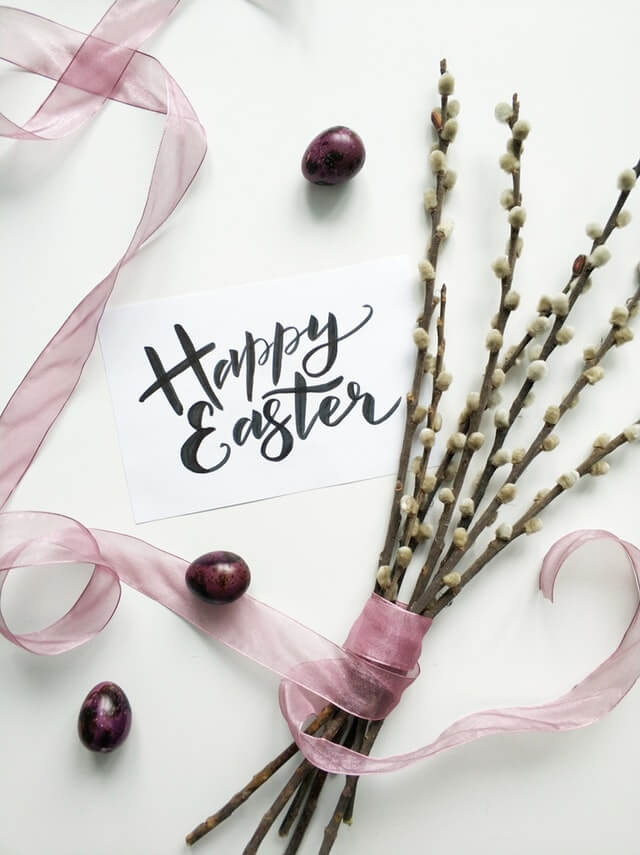
10/04/20 - Happy Easter
Raise your face to the sky and let the light of Easter flood your heart and remind you of the goodness of God.
Wishing you and your family a Happy Easter
09/04/20 - Reputations won and lost. Times are tough, tempers are short but memories are long. How can businesses preserve their good reputations?
There’s an old saying “when times are tough you discover who your true friends are.”
The same might be said of business relationships.
As businesses fight for survival there’s one friend many of them would like to have right now: their landlord.
But hold that thought for now.
Former Prime Minister Sir John Key raised the issue of managing relationships in a crisis situation last week in a video presentation to the Trans-Tasman Business Circle.
Key pointed out that companies needed to remember that crisis times had the potential to seriously impact reputations.
“There is tremendous public scrutiny and anxiety levels are high, so you don't want to add to that, and you also need to anticipate how the moves you make today will play out publicly.”
A rule of thumb for firms would be applying the “front page of the paper” test to the decisions they were making. Otherwise they could come out looking, in classic Key parlance, “a bit rough.”
Key said the crisis was also an opportunity for businesses to show they cared about the people working for them.
“They may be stretched thin and need to rely on a wage subsidy scheme, but it is still an opportunity to do the right thing.”
Reminding his audience that businesses would also learn a lot more about their organisation during crises than during good times no doubt brought back memories of managing the country through the 2008/09 global financial crisis.
But Key’s line that you need to anticipate how the moves you make today will play out publicly should be uppermost in the minds of CEOs, who, in the case of landlords, hold the future livelihood of many of their tenants in their hands.
Many stories coming into Newsroom are not encouraging, and suggest this message isn’t being heeded. They indicate there are plenty of landlords, including sizeable ones, simply acting in their own best interests.
In a recent story, Newsroom highlighted several examples of landlords, including major listed companies such as Kiwi Property Group, sending tenants generic letters reminding them of their obligation to pay rent - and other usual charges continue throughout this period unless the lease expressly stated otherwise.
No words or offers of support, no encouragement, no empathy whatsoever.
So much for heeding Prime Minister Jacinda Ardern’s message to be kind to one another.
Which brings us to corporate reputation.
While all businesses measure their profitability, very few ever pay attention to measuring or understanding their reputation – until something goes wrong.
Colmar Brunton, who for the past five years have compiled the annual NZ Corporate Reputation Index know a lot about how reputations can grow, and equally how quickly they can be undone.
Sarah Bolger, Colmar Brunton’s managing director, says that at times like this everything you do as a businesses is being done under an intense media glare.
“There are two key influences on people’s perception of reputation. One is the media, and the other is experience. If they are seeing you in the media, how are you coming across and is it with a human lens rather than a consumer lens? Remember that old rule, if you can’t be genuine, it's better to be silent.”
Bolger says when it comes to reputation, there are four important pillars to keep in mind.
“First, what is your style of leadership and how does that reflect the national mood? Second is fairness: how are you coming across and what decisions are you making that are deemed to be fair and are these based on what you think or what you know? There’s an important distinction.
Third is trust, and the importance of asking yourself if it feels like the right thing to do. And the final pillar is responsibility. In what relevant way are you helping people through this crisis, particularly at a time when we know people have heightened levels of anxiety?”
But for businesses, Bolger says there’s another important distinction to make from a reputational perspective.
“Are you listening or are you telling? Staying close to your customers and having a genuine customer-centric lens based on their needs is the most important test.”
Brian Spisak, a senior lecturer at the University of Otago’s School of Management says another way to think about corporate reputation is by applying what he terms the three Rs of co-operation with stakeholders: Reciprocity, Reputation and Retribution.
“Businesses must ask themselves are they oriented towards the interests of their stakeholders or their shareholders and whose interests are being put first? If you establish a reputation as a reciprocator beyond the pure economic factors then you don’t have to worry about the third R, that of retribution where customers perceive your behaviour to be selfish and they intentionally avoid your products or services as a result.”
Spisak says you can still be shareholder-oriented provided you have a long-term vision and sometimes taking a short-term profit hit for long term sustainability is clearly going to be a more effective strategy for businesses to consider.
Benjamin Franklin, one of America’s founding fathers, summed reputation up the best “It takes many good deeds to build a good reputation, and only one bad one to lose it.”
Perhaps, in the end, John Key’s newspaper test is still the simplest and most effective measure of deciding if your approach is going to enhance or detract from your reputation.
If more business leaders adopt this approach we might yet successfully navigate our way through this crisis with more reputations intact.
(Source: Newsroom, Andrew Patterson,
Covid 19 Notice
As the impact of the coronavirus continues to evolve, we face this unprecedented situation together. The pandemic is affecting all of us. At Terra Nova Consultancy Ltd we wish to reach out and update you on how we are addressing it. Our top priority is to protect the health and safety of our employees, clients, and our communities. Our focus on customer service remains at the center of everything we do, and we are fully committed to continue to serve you with our services, and striving to provide our services without interruption.Please listen and act upon the advise given by the Government, only in that way will we together be able to combat this challenge. And as always, stay healthy and keep safe.
TNC E-books
The Terra Nova e-book page contains publications in e-book and e-news format containing comments and reviews from Terra Nova Consultancy Ltd, and other contributors, that relate to a number of issues from immigration to operating a business.
Some of the Terra Nova e-books e-book and the Terra Nova e-news issues we believe may be quite helpful for prospective immigrants.
Check back regularly to find new editions of our Terra Nova e-book and Terra Nova e-news range.
Quick Links
Translate this site
Contact Details
Terra Nova Consultancy Ltd
14 Glanworth Place, Botany 2106
Manukau, Auckland 2106,
New Zealand
Please arrange visit by appointment.
Mobile: +64 275 706 540
Postal Address:
PO Box 58385, Botany
Manukau, Auckland 2163,
New Zealand
Licensed Immigration Adviser
Johannes Petrus (Peter) Hubertus Cornelis Hendrikx

License number: 200800214
Is your Immigration Adviser
licenced by the NZ Government?
Click here for details www.iaa.govt.nz