
.|

NEWS
A variety of immigration, business and general news articles taken from New Zealand newspapers, websites and other sources (sources are mentioned at the bottom of each article) and selected by Terra Nova Consultancy Ltd. It may assist the reader being more or less up-to-date what is happening in Aotearoa, "the Land of the Long White Cloud". Happy reading, enjoy ... and if you have any questions on these updates - please contact us...
Newest article always on top.
10/03/20 - What is COVID-19?
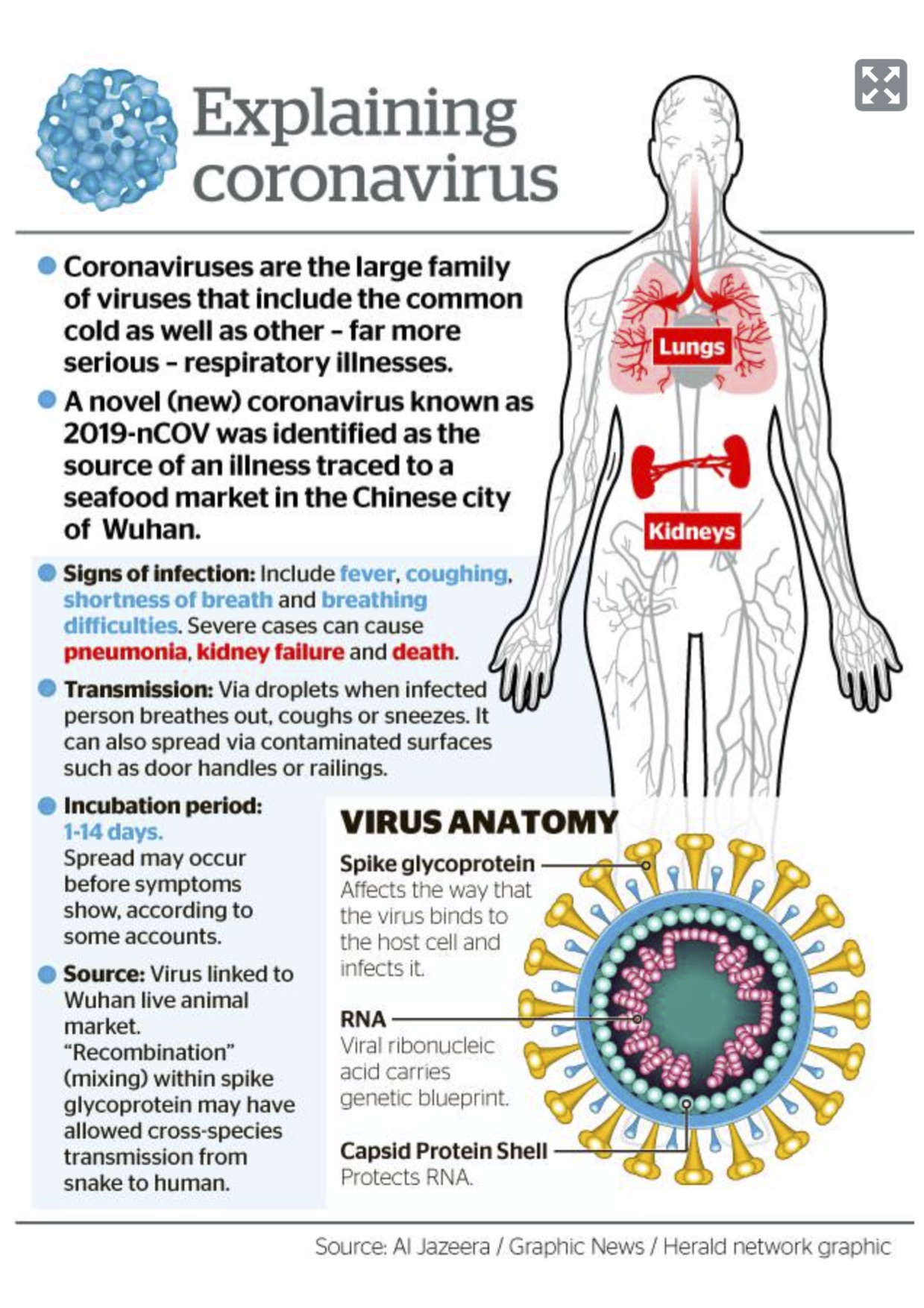
COVID-19 is a new illness that can affect your lungs and airways. It’s caused by a type of coronavirus. There are simple steps you can take to protect you and your family/whānau.
Symptoms
The symptoms of COVID-19 are:
- a cough
- a high temperature (at least 38°C)
- shortness of breath.
These symptoms do not necessarily mean you have COVID-19. The symptoms are similar to other illnesses that are much more common, such as cold and flu.
Shortness of breath is a sign of possible pneumonia and requires immediate medical attention.
We don’t yet know how long symptoms take to show after a person has been infected, but current World Health Organization assessments suggest that it is 2–10 days.
If you have these symptoms and have recently been to a country or area of concern, or have been in close contact with someone confirmed with COVID-19, please telephone Healthline (for free) on 0800 358 5453 or your doctor immediately.
How it spreads
COVID-19, like the flu, can be spread from person to person. When a person who has COVID-19 coughs, sneezes or talks, they may spread droplets containing the virus a short distance, which quickly settle on surrounding surfaces.
You may get infected by the virus if you touch those surfaces or objects and then touch your mouth, nose or eyes.
That’s why it’s really important to use good hygiene, regularly wash and thoroughly dry your hands, and use good cough etiquette.
Prevention – how to protect yourself and others
- Cough or sneeze into your elbow or by covering your mouth and nose with tissues.
- Put used tissues in the bin or a bag immediately.
- Wash your hands with soap and water often (for at least 20 seconds).
- Try to avoid close contact with people who are unwell.
- Don’t touch your eyes, nose or mouth if your hands are not clean.
- Avoid personal contact, such as kissing, sharing cups or food with sick people.
- Clean and disinfect frequently touched surfaces and objects, such as doorknobs.
- Stay home if you feel unwell.
- Call Healthline on 0800 358 5453 if you have any symptoms and have been to any countries or territories of concern or have been in close contact with someone confirmed with COVID-19.
What to do if you may have been exposed
People returning from mainland China, Iran, northern Italy or the Republic of Korea, or who may have been exposed to COVID-19, are self-isolating to keep their communities safe.
- If you returned from mainland China, Iran, northern Italy or the Republic of Korea in the last 14 days, then you should self-isolate for 14 days from the date of departure.
- If you have been in close contact with a confirmed case of COVID-19 you should self-isolate for 14 days from the date of close contact.
We know from other outbreaks that self-isolation is effective, and most people are good at keeping themselves – and others – safe and well. To find out more, see our Self-isolation resource.
More information for contacts of cases in New Zealand is available at Contact tracing for COVID-19.
Dedicated Healthline 0800 number for COVID-19 health advice and information. The number is 0800 358 5453 (or for international SIMs +64 9 358 5453). It is free and available 24 hours a day, 7 days a week.
People calling that line will be able to talk with a member of the National Telehealth Service. They have access to interpreters.
You should call that dedicated number:
- to register if you have self-isolated yourself
- for any coronavirus health advice and information and any questions you have about coronavirus, self-isolation etc.
Healthline’s main number is still the one to call for non-coronavirus health concerns – 0800 611 116.
Whichever number you call, you will get professional health advice and information.
Treatment
Currently, there is no specific treatment for coronavirus, but medical care can treat most of the symptoms.
Immunisation
As this is a new virus, there is currently no vaccine available. Researchers are in the early stages of developing one.
Travelling to affected countries
The Ministry of Foreign Affairs and Trade is providing the latest advice for travellers on the Safe Travel website.
More information
For more information see:
- Questions and answers about novel coronavirus
- Advice for travellers
- Self-isolation
- Factsheets for contacts of suspected or confirmed cases
Our social Media:
- Facebook page: @minhealthnz
- Twitter channel @minhealthnz
We will be using these channels to alert people to key updates and messaging specifically about COVID-19.
- World Health Organisation (WHO) COVID-19 website.
- Safe Travel website.
- New Zealand Government COVID-19 page.
(Source: Ministry of Health NZ)
17/02/20 - Immigration deadlock: 'Endless waiting has destroyed all my dreams'
The government is locked in talks about an overhaul of the residence programme to prioritise highly skilled immigrants.
Coalition ministers are grappling with the shape the new residence programme will take, after the last one expired in December.
Cabinet discussed last year how it could put a cap on each category of residence, such as partnerships and business visas.
Immigration minister Iain Lees-Galloway said the aim was for residence policy to be more focused on skilled immigrants.
But Cabinet was still working through the details.
"Because we are looking to take a new approach to this, we are taking our time about it in developing a new policy which I think will work better for people in the future," he said.
"We certainly want to look more closely at the individual streams [or residence] and and that will help us to bring a greater focus to supporting skilled migrants to achieve residency, that is absolutely part of the conversation that we're having.
"If you just focus on the overall planning range without having some focus on each of the individual streams, you can find that skilled migrants get crowded out by the other categories.
"So if we've got a clear view about how many visas we expect to issue in each of the categories, you reduce the risk of losing out on the skilled migrants that you really want to attract to New Zealand."
But he said in the meantime, he had told immigration officials to focus on how quickly visa applications are decided.
Some skilled workers are waiting more than 15 months for residence visas.
"I've made it absolutely clear to Immigration New Zealand (INZ) that I do want visa processing times to speed up, I think people are waiting too long and they are working exceptionally hard on doing that," he said.
"Even though we compare reasonably with other countries, at the moment it is my desire to see those processing times come down and people get their decisions a lot sooner."
Kevin Li, his wife and son are among the more than 37,000 people waiting for a residence decision.
He is a cook in Auckland's North Shore and met the 160-point criteria for residence when he applied in January last year.
"I received a letter from INZ which told me my case would be finished in November 2019," he said. "However, I have not had a case officer because I am not treated as a priority application for INZ.
"I understand maybe a cook did not pay more tax than a teacher or a nurse, but he still contributes to this country and society. I also have a family and I must give my son a future."
The family has to rent because of foreign ownership rules.
"When I wake up every morning, the first question comes into my mind is if I can have a case officer today. I have many plans, such as selling my house in China and buying a new one in NZ, buying a business," he said.
"But the endless waiting has destroyed all my dreams. The life of my family is going to be hopeless. When my son asks me when he can have a new bicycle and a cat, I tell him when we have our own house and residence.
"I can see how disappointed he is, I ask myself thousand of times if I should have come to New Zealand and if I destroyed my son's future."
The Association for Migration and Investment is calling for an urgent meeting with the minister and Immigration New Zealand and said skilled migrant waiting lists will be at the top of the agenda.
Its policy chair, Arunima Dhingra, said applicants had not been told that skilled migrant applications, which were meant to be dealt with in the order they were submitted, had been queued behind ones deemed to be a higher priority.
"A tradesman on $55 to $60k, [his application] will sit there for much much longer," she said. "What we say is 'wouldn't transparency be ethical for those people that are applying?'
"So then they can plan their lives and know whether it's going to be two years in the waiting before they hear anything."
(Source: Radio NZ, Gill Bonnett)
10/02/20 - Immigration ‘disaster’ waiting to happen
A fast-growing backlog of residency applications has some wondering if the Government will be forced to repeat its 2003 'wipeout' of applications to clear the decks. The minister denies he's planning this, but the pressure is building, Dileepa Fonseka reports.
Kate, originally from the UK, is on a working visa. She is employed in the healthcare industry and, on paper, meets all the criteria for permanent residency.
In January last year, her application for permanent residency was added to a pile of 9800 others waiting for a decision.
By November last year, that pile had ballooned to over 26,000 applications and Kate was still waiting for an answer.
“I don’t see how they’re going to get through this whole backlog of people but my argument is 'why do they keep letting people apply?'” she told Newsroom.
After they lodge expressions of interest (EOIs), migrants are invited to apply for residency, if their applications tick
the right boxes.
“If I don’t get it then I’ve got to change my whole life and I’ve worked so hard to call this my home and now you’re like ‘oh well we’ll get around to it’.
Their residency applications then must be approved if they meet the criteria, but there are no set timeframes for how long INZ can take to consider applications.
When Kate asked Immigration in January 2020 for an update, she was told INZ were still processing applications from December 2018.
“They’re just not doing them...it hasn’t moved since December 2018.”
“I just don’t know how they can treat people like this, it’s massive anxiety and stress.”
“If I don’t get it then I’ve got to change my whole life and I’ve worked so hard to call this my home and now you’re like ‘oh well we’ll get around to it’.”
The build-up of applications on hold since then has some migrants and their lawyers fearful a “draconian” method to wipe out applications from the queue, last employed in the early 2000s, could be used.
National party spokesman for Immigration Stuart Smith says there are widespread complaints about the delays.
Decisions on skilled migrant residency applications have dropped 25 percent since the coalition Government came to power. That is for both declines and acceptances.
Over 30,000 residency decisions were made in the year to November 2017 but that dropped by 7000 a year late. In the year to November 2019 just over 22,000 decisions were made. Immigration lawyers are now advising clients that they should expect to wait just over a year for applications that previously took three months.
Huge demand for fewer spots
The extra workload on Immigration New Zealand is purely a numbers game because the number of people in New Zealand on temporary work visas and student visas (often with work rights) has more than doubled to nearly 290,000 a year over the last decade under both flavours of Government. Many go on to apply for permanent residency once here, and are often tempted to come to New Zealand by employers and education providers on the grounds their temporary work or student visa provided them a pathway to residency.
Yet both the National-led and Labour-led Governments have reduced the number of planned residency approvals by around 20 percent to around 37,000 a year. That means that back in 2008 there were a potential 125,000 applicants for 47,000 residency visas: a ratio of 2.65 to
one. This year there is the potential for 290,000 applicants for 37,000 permanent places: a ratio of 7.84 to one.
Essentially, New Zealand Inc suggested they come here to work hard (often for low pay) and get a pathway to residency. Their visa documents were even labeled 'Pathway to Residence' until mid 2018.
This combination of many more applicants applying for few spots has put case officers and their managers under huge pressure to reject or park many more applications. It has meant that the average number of skilled permanent residency visas has risen to 3,170 per month in the first 11 months of 2019 from an average of 1,990 per month in the 24 months of 2017 and 2018. Immigration data shows an average of 1,730 skilled work residency approvals per month in 2019. There were 1,674 approvals per month in calendar 2018 and 2,010 per month in 2017 under National (until November).
Applications for permanent work residence visas has risen 59 percent in the last two years, but approvals are running about the same in the last year under Labour as they were in the last year under National.
Applicants in limbo appeal to MPs
National Party spokesman for Immigration Stuart Smith said colleagues on both sides of Parliament had noticed the backlog.
“Every member of Parliament will be getting people through their doors with these stories about their lives being put on hold with these delays,” he said.
Immigration Minister Iain Lees-Galloway said applications were being processed at the “normal rate” and the problem was one of increasing numbers of people applying.
“Processing times have been increasing since 2014 and National ministers did nothing about it. I have focused Immigration New Zealand on getting waiting times down. They’re making progress and report to me weekly,” Lees- Galloway said.
“While many countries have residency waiting times of well over 12 months, we don’t want that. We want to be efficient while ensuring we manage risk and make careful decisions," he said.
Fast rejections: stalled approvals
Immigration lawyer Alastair McClymont said there had been no slowdown in the number of applications being declined, and they were swiftly processed. The delays came on applications where applicants meet the criteria, he said.
McClymont and others have alleged a ‘go-slow’ on residency applications, claiming the Government is trying to hold back the number of people it grants residency to by processing applications slowly.
INZ has to grant applicants permanent residency if they meet the requirements for it, but there are no laws surrounding how long INZ officers can take to do so.
“It's like a dam where the pressure is building and building and building because everybody is continuing to apply for skilled migrant visas, but they're not getting any decisions,” McClymont said.
“I can foresee a disaster happening in the future.”
Courier vans of applications
During the last Labour government in the early 2000s New Zealand faced a sizeable backlog of permanent residency applications. More Kiwis returned home than expected in the wake of the September 11th attacks and an accompanying economic downturn. The then- government then ramped up residency requirements so fewer migrants would be eligible to settle here permanently.
New Zealand has operated a 'planning range' of 45,000 to 50,000 residency approvals per year since the early 2000s, and this has often been expressed as a two year range from 90,000 to 100,000. The previous National Government lowered the range to 85,000 to 95,000 for the two years to June 2018, which meant the annual allowance fell from 47,500 to 45,000. The current
Labour-New Zealand First Coalition Government lowered that again to between 50,000 to 60,000 for the period from 1 July 2018 to 31 December 2019, effectively lowering the annual rate of 37,000 for the period that expired at the end of June 2018.
The announcement by the Labour Government in 2002 caused courier vans filled with residency applications to land on New Zealand’s door almost overnight as offshore applicants for residency, many of whom didn’t have job offers, rushed to get their forms in so they’d be judged by the older, more lax standards.
Legally unable to decline applications that met the old criteria but not the new, in 2003 the Clark government “lapsed” them instead, erasing them from the queue at the stroke of a pen.
“They’re already living here, and if you’re living here already with a work visa you’re committed to the country I guess...you’re going to stay here and stick it out.”
Those applicants could still apply for residency, but they’d have to send in a new application under the new rules.
The move triggered a successful legal challenge from the New Zealand Association of Migration and Investment.
But it was a pyrrhic victory for NZAMI, as the law was changed to allow the government full discretion to lapse applications.
Could Labour do it again?
Lawyer Mark Williams, of Christchurch-based firm Lane Neave, led that legal challenge and said that while it would be easier for a Minister of Immigration to use that power today, it would have much more serious consequences than it did back then.
“We are in intense international competition for all those people you see on that long-term skills shortages list, your IT specialists, surgeons, there’s a range of occupations on there that the entire world wants,” Williams said.
“If you develop a reputation in an immigration sense of declining and pushing out residency applications made in good faith, or there’s huge delays, then from an international attraction perspective that pushes us back quite a wee way,” he said.
While the pile of applications in the early 2000s were largely made up of unemployed offshore migrants who took a punt on lax immigration standards, today’s applicants were mostly already living and working in New Zealand in jobs where they were needed, Williams said.
“It’s embarrassing for a government to actually lapse applications of people who have made applications in
good faith.”
“Back in the early 2000s I could see exactly why they decided to lapse and get rid of them because you couldn’t have 20,000 people coming here with residency visas who couldn’t get jobs.”
Time to "give up"?
Lees-Galloway said “there is no plan to lapse applicants on the waiting list”.
“Residency policy is an important one and should not be rushed, nor should it be simplistically based on a number, but flexible and adaptable for our future needs in the best interests of New Zealand,” Lees-Galloway said via an emailed statement.
Anu Kaloti, spokeswoman for the Migrant Workers Association said current immigration policy seemed to be based on the hope that “people will get frustrated, give up some day and leave, and they will just get replaced with a new batch of temporary migrants”.
© Provided by Newsroom Immigration Minister Iain Lees- Galloway says he has no plans to lapse residency applications.
'Left in long-term limbo'
“Whichever party is in power they need to acknowledge the fact that there’s people here who have been here five years, ten years, easily, and they keep going from one temporary visa to the next in the hope one day they will become permanent residents here,” Kaloti said.
Kate, who didn’t want her surname published for fear it might delay her application even more, now faces the prospect of her visa expiring before she gets a residency decision back. She also can’t lose her job, or change employers, within that time.
“There’ll be thousands of people whose visas expire this year so what do they do? It’s just such a mess,” Kate said.
“Obviously it’s crossed my mind whether I should just give up and just say I want my money back and try Australia or something else,” she said.
“But it’s like I’ve worked so hard to call this my home. I’ve paid my application fee. I’ve worked so hard at my job: why should I give up?”
(Source: Newsroom)
08/02/20 - Explainer: What 2020 holds for immigration in NZ
Worker exploitation, visa delays, ballooning application numbers and anti-immigration rhetoric could be among the toxic mix in election year.
On the agenda as well is work to target immigrants to the regions where they are most needed and to prioritise some residence applicants over others.
What can we expect to see in the year to come?
One of the first immigration announcements is expected to be the government's new two-year residence programme. It already lowered the target band of new residents to 50-60,000 and that may be changed again - and a cabinet paper suggests that it's looking at prioritising certain categories, possibly such as skilled migrants, and capping others - such as partnership visas.
The government is also rolling out new employer-assisted work visas and regional workforce planning. The government wants to find ways of getting industry to attract New Zealanders into those jobs immigrants are doing, in return for a streamlined visa process. The first negotiations to make that happen are expected to be with the residential care and meat processing sectors, as industries that employ many immigrants.
Another change we will see this year is the refugee quota increasing to 1500 in July. Six new settlement areas have been to the existing ones for refugees - Ashburton, Blenheim, Levin, Masterton, Timaru and Whanganui - and a lot of work is going on there in increasing housing supply in those areas, and with the community and health sectors.
Tackling worker and student exploitation and possible changes to Pacific immigration policies might also be looked at.
And apart from policy changes?
There's a lot of operational challenges too: while the politicians may be focused on the future, the here and now will always raise its head. Last year it was the debacle of partnership visas, and visa processing delays caused by international branch closures.
That's continuing and among the things that will crop up between now and the election may also be things like Karel Sroubek, the convicted drug dealer, who is appealing his deportation and appears before the parole board again later this month.
How important a role will immigration play in this year's election?
New Zealand has historically not had highly polarised debates about immigration.
Immigration came up at the 2017 election, after concerns that it was exacerbating housing supply and infrastructure problems.
New Zealand First and Labour to a lesser extent campaigned then on lowering immigration. Whether they delivered on that - and whether voters liked how they did it - may be crucial.
It can depend on how you cut the numbers - new resident numbers are the lowest since the turn of the century, while work visa numbers are higher than they have ever been, and net migration is still at historically high levels.
Labour may hope it can point to its work in tackling immigrant exploitation and reforming work visas. National has criticised the government on its record, including problems that visa processing delays have caused for the economy and businesses.
If last year is anything to go by, New Zealand First will continue to press on with immigration as a key way to help bring home the vote.
It claimed credit for high income restrictions introduced on immigrants' parents and a tougher line on partnership applications.
NZ First Minister Shane Jones recently suggested it may consider a population policy, after getting into a war of words with the Indian community.
"I'm on incredibly fertile ground for the party I represent," he told RNZ.
He said he was saddened by the "levels of verbiage that the Indian communal leadership have thrown at the party."
"I would just say to the activists from the Indian community, tame down your rhetoric, you have no legitimate expectations in my view to bring your whole village to New Zealand and if you don't like it and you're threatening to go home - catch the next flight home."
(Source: RNZ News, Gill Bonnett)
01/01/20 - 'Indicators are flashing red': Warning signs recession is looming
Inverted yield curves are usually followed by a recession.
2019 felt like a rollercoaster ride. 2020 is almost certain to be even wilder. Our part of the world has never started a year with interest rates so low and with so much uncertainty around.
Doubt is enveloping house prices, wages, and global markets. It's hard to see how reserve banks could possibly get relaxed enough about the future to raise interest rates
So what will happen in the new year? Here are the big issues you should be thinking about.
A RECESSION?
In 2019, many global recession warning signs started flashing red.
Yield curves briefly inverted in the US, which has been a mostly reliable precursor to recession in the last 40 years.
The risk of recession remains real for Australia and New Zealand.
Inverted yield curves are usually followed by a recession. When the blue line dips below zero, a recession usually follows. But was the recent dip big enough?
Google trends data also shows something interesting: a big surge in people searching for information about recessions. This indicator may be less technical than the yield curve, and it has less history to draw on, but it certainly peaked before the GFC, so its accuracy should not be sneezed at.
Closer to home, the biggest indicator of a possible recession may be the Reserve Bank in Australia is talking about quantitative easing. Their forecasts remain mostly positive, but quantitative easing is a tool for desperate times, and if it's on the table for use in 2020, we have to ask why.
Interest rates are already at record lows and seemingly having little effect. If a recession does come in 2020, it's frightening to contemplate how little reserve banks might be able to do to reverse it.
JOBS AND EARNINGS
2019 was not a terrible year for jobs, but it was not impressive. Overall unemployment dropped in New Zealand, but under-employment remains a big problem on both sides of the ditch.
Rising underemployment is usually a bad sign for wages. The backbone of the economy is our paycheques. Workers mostly spend what they earn, and our earnings
have not been growing well. Wages growth is barely above inflation. It is fair to ask what will happen in 2020.
One useful sign for the future is the ANZ job ads series. It counts up job ads to try to predict the future of the labour market. But it has bad news about next year. Job ads have been falling, as the next graph shows.
This suggests fewer people will be starting new jobs soon. This is bad news because to get a raise we need a tighter labour market, i.e. lots of people getting hired and not so many getting fired. Instead, the reverse seems to be happening.
GLOBAL MARKETS
More and more, Australia and New Zealand's economies depend on global markets. We can be lifted up by policies made in Beijing, but we can also be brought down by mistakes made on Wall Street and Silicon Valley. And there have been plenty of the latter in history.
2019 was the year of the WeWork saga. A hot American real estate start-up funded with way too much venture capital money, it was going to float on the stock market for billions of dollars. Instead it suddenly stumbled and fell. The float was cancelled. The CEO was sacked. A whole lot of dodgy dealing was exposed. The company is now slashing staff and trying to avoid bankruptcy.
WeWork points to a sickness in the American start-up bubble. In 2019, WeWork's problems looked isolated, but are they?
In 2007, the pension funds that were having problems with subprime loans looked isolated too. It was only by 2008 we realised they were a symptom of a big problem that led the whole word into the global financial crisis.
WeWork's fall this year offered a reminder of the danger of hype.
A lot of money has chased the start-up bubble, and if start-up firms turn out to have been a bad investment, a lot of money is going to be lost. How many WeWorks are out there? How many companies pretend to be winners but are actually hollow inside? Is Uber one? Slack? Spotify? Could they be revealed in 2020 and harm the global economy in the process?
And all this is without mentioning Donald Trump, Brexit, impeachment, the trade war and the US election. 2020 is going to be insanely busy. Finding out what happens to global markets is just one of the many reasons 2020 is going to be a hell of a ride.
Source: NZ Herald - News.com.au)
27/12/19 - Top baby surname reflects New Zealand's changing demographics
Ask someone what the most common surname in New Zealand is and invariably the answer is Smith.
But the list of top 10 surnames for babies born in 2019 reveals Smith has been eclipsed, perhaps from an unexpected quarter.
According to the Department of Internal Affairs, the most common surname for babies born in New Zealand last year was Singh.
Smith comes in a close second, while another Indian name Kaur is the third most common, ahead of Wilson, Williams and Brown.
Across the country, the most common Chinese surname for babies born in 2019 was Wang, back in ninth place.
The Registrar-General of Births, Deaths and Marriages, Jeff Montgomery, said Singh's emergence reflected immigration trends.
"So people have been here for a number of years and have become a New Zealand citizen and got a New Zealand passport and what we are seeing here I think is the Indian community is the highest for citizenship and now their names are flowing through into the top surnames across the country."
While Singh dominated overall, it was a different story in the South Island where the top four surnames were Smith, Wilson, Brown and Williams.
Singh and Kaur were in fifth and sixth place respectively.
Montgomery said it showed where migrants had chosen to put down roots.
"It suggests migration patterns and where new migrants tend to settle and we know they tend to settle in the main centres and in particular Auckland. It's simply a reflection of where younger parents who are migrating are settling."
Supplied
Professor Paul Spoonley said that between 2013 and 2018, New Zealand had the largest net inflow of migrants it's ever seen.
Massey University professor Paul Spoonley said the DIA figures reflected the dramatic demographic change occurring in New Zealand.
Professor Paul Spoonley said that between 2013 and 2018, New Zealand had the largest net inflow of migrants it's ever seen.
Massey University professor Paul Spoonley said the DIA figures reflected the dramatic demographic change occurring in New Zealand.
"Between 2013 and 2018 we've had the largest net inflow of migrants we've ever seen. So 260,000 additional people and what you see in that period is that the largest group in many of the visa categories is Indian and they are coming here under the skilled visa categories and they are coming as families."
Spoonley said those families were now starting to have their own babies.
He said when you focused on baby surnames in Auckland alone, the city revealed it had its own unique story.
"The first two names are again Indian as you might expect but then you get a whole bunch of Chinese surnames. What is really interesting about the Auckland names is that of the 10 only one of them is not Indian or not Chinese."
Surnames in Auckland reveal the city's own unique story (Antonia anderson/Stuff).
New Plymouth Sikh society member Sunny Singh Grewal said the rise of the name Singh had taken him by surprise.
"The first time I heard was when my son told me a couple of weeks back. He said the Singhs are the fastest growing name that he found on the internet for New Zealand. I'm actually totally taken by it which I never imagined 20 years ago."
Grewal said Singh was a common name in the Indian state of Punjab, among Sikhs.
He said it could be traced back to the 10th Sikh spiritual master, Guru Gobind Singh, in the 17th century.
"He basically changed the name. Like all Sikhs must have the name Singh which comes from Sanskrit meaning lion and the Sikh being the warrior. And that's how the name was given to every Sikh boy gets the name Singh."
Grewal said the idea was to throw off the yoke of the caste system and the surname Kaur serves a similar purpose for girls.
He said while he chose to reclaim his caste name and use Singh as a middle name, most Sikhs continued to use Singh as their surname.
Source; ROBIN MARTIN/RNZ RNZ.co.nz )
20/12/19 - Skilled Migrant and Essential Skills — remuneration threshold changes
Click here for details noting that this will become effective as from 24/02/2020
18/12/19 - A SILENT TRAGEDY
There is a silent tragedy that is unfolding today in our homes, and concerns our most precious jewels: our children.
Our children are in a devastating emotional state! In the last 15 years, researchers have given us increasingly alarming statistics on a sharp and steady increase in childhood mental illness that is now reaching epidemic proportions
Statistics do not lie:
- 1 in 5 children have mental health problems
- A 43% increase in ADHD has been noted
- A 37% increase in adolescent depression has been noted
- There has been a 200% increase in the suicide rate in children aged 10 to 14
What is happening and what are we doing wrong?
Today's children are being over-stimulated and over-gifted with material objects, but they are deprived of the fundamentals of a healthy childhood, such as:
- Emotionally available parents
- Clearly defined limits
- Responsibilities
- Balanced nutrition and adequate sleep
- Movement in general but especially outdoors
- Creative play, social interaction, unstructured game opportunities and boredom spaces
Instead, in recent years, children have been filled with:
- Digitally distracted parents
- Indulgent and permissive parents who let children "rule the world" and whoever sets the rules
- A sense of right, of deserving everything without earning it or being responsible for obtaining it
- Inadequate sleep and unbalanced nutrition
- A sedentary lifestyle
- Endless stimulation, technological nannies, instant gratification and absence of boring moments
What to do?
If we want our children to be happy and healthy individuals, we have to wake up and get back to basics. It is still possible! Many families see immediate improvements after weeks of implementing the following recommendations:
- Set limits and remember that you are the captain of the ship. Your children will feel more confident knowing that you have control of the helm.
- Offer children a balanced lifestyle full of what children NEED, not just what they WANT. Don't be afraid to say "no" to your children if what they want is not what they need.
- Provide nutritious food and limit junk food.
- Spend at least one hour a day outdoors doing activities such as: cycling, walking, fishing, bird / insect watching
- Enjoy a daily family dinner without smartphones or distracting technology.
- Play board games as a family or if children are very small for board games, get carried away by their interests and allow them to rule in the game
- Involve your children in some homework or household chores according to their age (folding clothes, ordering toys, hanging clothes, unpacking food, setting the table, feeding the dog etc.)
- Implement a consistent sleep routine to ensure your child gets enough sleep. The schedules will be even more important for school-age children.
- Teach responsibility and independence. Do not overprotect them against all frustration or mistakes. Misunderstanding will help them build resilience and learn to overcome life's challenges,
- Do not carry your children's backpack, do not carry their backpacks, do not carry the homework they forgot, do not peel bananas or peel oranges if they can do it on their own (4-5 years). Instead of giving them the fish, teach them to fish.
- Teach them to wait and delay gratification.
- Provide opportunities for "boredom", since boredom is the moment when creativity awakens. Do not feel responsible for always keeping children entertained.
- Do not use technology as a cure for boredom, nor offer it at the first second of inactivity.
- Avoid using technology during meals, in cars, restaurants, shopping centers. Use these moments as opportunities to socialize by training the brains to know how to work when they are in mode: "boredom"
- Help them create a "bottle of boredom" with activity ideas for when they are bored.
- Be emotionally available to connect with children and teach them self-regulation and social skills:
- Turn off the phones at night when children have to go to bed to avoid digital distraction.
- Become a regulator or emotional trainer for your children. Teach them to recognize and manage their own frustrations and anger.
- Teach them to greet, to take turns, to share without running out of anything, to say thank you and please, to acknowledge the error and apologize (do not force them), be a model of all those values you instill.
- Connect emotionally - smile, hug, kiss, tickle, read, dance, jump, play or crawl with them.
I thank you if you share it.
(Article written by Dr. Luis Rojas Marcos Psychiatrist)
11/12/19 - The number of work visas being approved is rising strongly while residency visas are falling
New Zealand's total migrant population increase was a whisker short of 17,000 in the 12 months to the end of November.
The latest figures from the Ministry of Business Innovation and Employment (based on Immigration NZ data) show there were 472,800 people in this country on migrant visas at the end of November, up by 16,989 (+3.7%) compared to the same time last year.
NZ's migrant population has been steadily increasing for the last six years (see graph below), rising from 343,065 at the end of November 2013 to 472,800 at the end of last month, an increase of 129,735 (+37.8%) over that period.
Of the 472,800 migrants at the end of November, the biggest group by far were the 211,698 people on work visas, making up 45% of all migrants, followed by 185,463 on residence visas (39%) and 74,109 on student visas (16%).
Not only are people on work visas the biggest group of migrants in the country, they are also the fastest growing group.
In the 12 months to the end of November 251,133 work visas were approved, up 9.3% on the previous 12 months and up 53.5% on the 12 months to November 2013.
By comparison just 34,614 residence decisions were approved in the 12 months to November, down 12.6% on the previous 12 months and down 31% from the recent peak of 50,139 residency approvals in the 12 months to November 2016.
(Source; Interest, Greg Ninness)
Covid 19 Notice
As the impact of the coronavirus continues to evolve, we face this unprecedented situation together. The pandemic is affecting all of us. At Terra Nova Consultancy Ltd we wish to reach out and update you on how we are addressing it. Our top priority is to protect the health and safety of our employees, clients, and our communities. Our focus on customer service remains at the center of everything we do, and we are fully committed to continue to serve you with our services, and striving to provide our services without interruption.Please listen and act upon the advise given by the Government, only in that way will we together be able to combat this challenge. And as always, stay healthy and keep safe.
TNC E-books
The Terra Nova e-book page contains publications in e-book and e-news format containing comments and reviews from Terra Nova Consultancy Ltd, and other contributors, that relate to a number of issues from immigration to operating a business.
Some of the Terra Nova e-books e-book and the Terra Nova e-news issues we believe may be quite helpful for prospective immigrants.
Check back regularly to find new editions of our Terra Nova e-book and Terra Nova e-news range.
Quick Links
Translate this site
Contact Details
Terra Nova Consultancy Ltd
14 Glanworth Place, Botany 2106
Manukau, Auckland 2106,
New Zealand
Please arrange visit by appointment.
Mobile: +64 275 706 540
Postal Address:
PO Box 58385, Botany
Manukau, Auckland 2163,
New Zealand
Licensed Immigration Adviser
Johannes Petrus (Peter) Hubertus Cornelis Hendrikx

License number: 200800214
Is your Immigration Adviser
licenced by the NZ Government?
Click here for details www.iaa.govt.nz