
.|

NEWS
A variety of immigration, business and general news articles taken from New Zealand newspapers, websites and other sources (sources are mentioned at the bottom of each article) and selected by Terra Nova Consultancy Ltd. It may assist the reader being more or less up-to-date what is happening in Aotearoa, "the Land of the Long White Cloud". Happy reading, enjoy ... and if you have any questions on these updates - please contact us...
Newest article always on top.
26/04/17 - Top source countries for migrant workers are not Asian
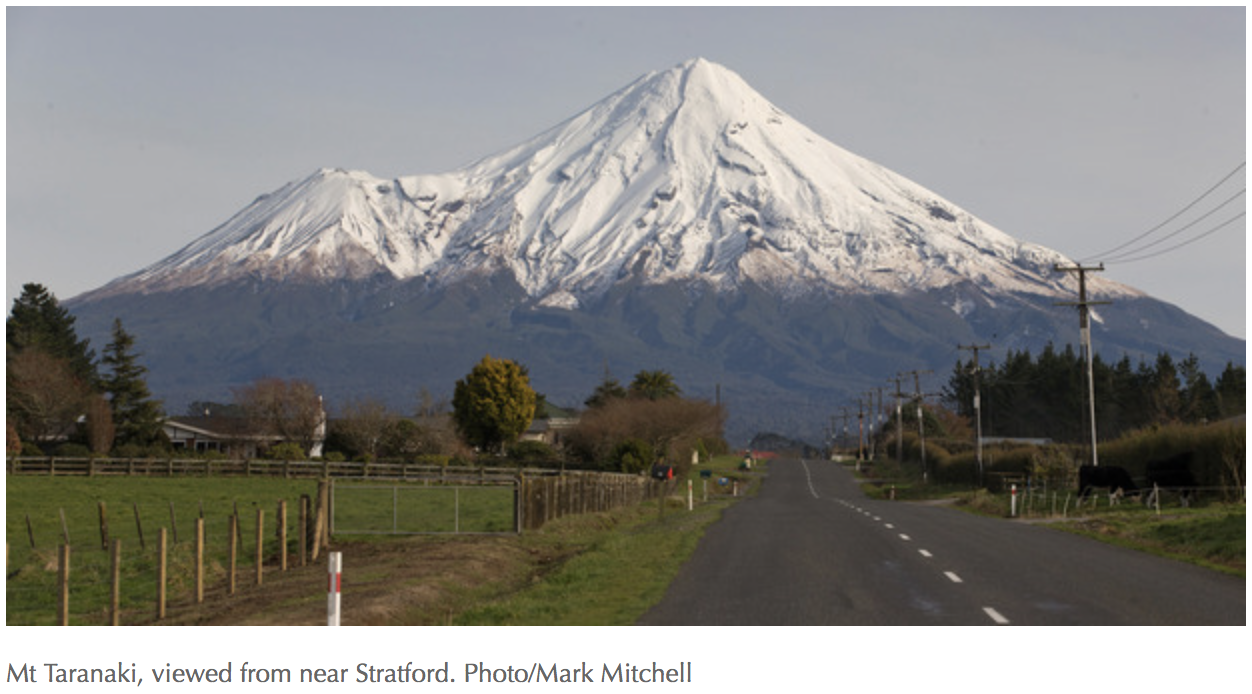
A rise in work visas has been the driving force behind record immigration numbers but the main source countries are not from Asia.
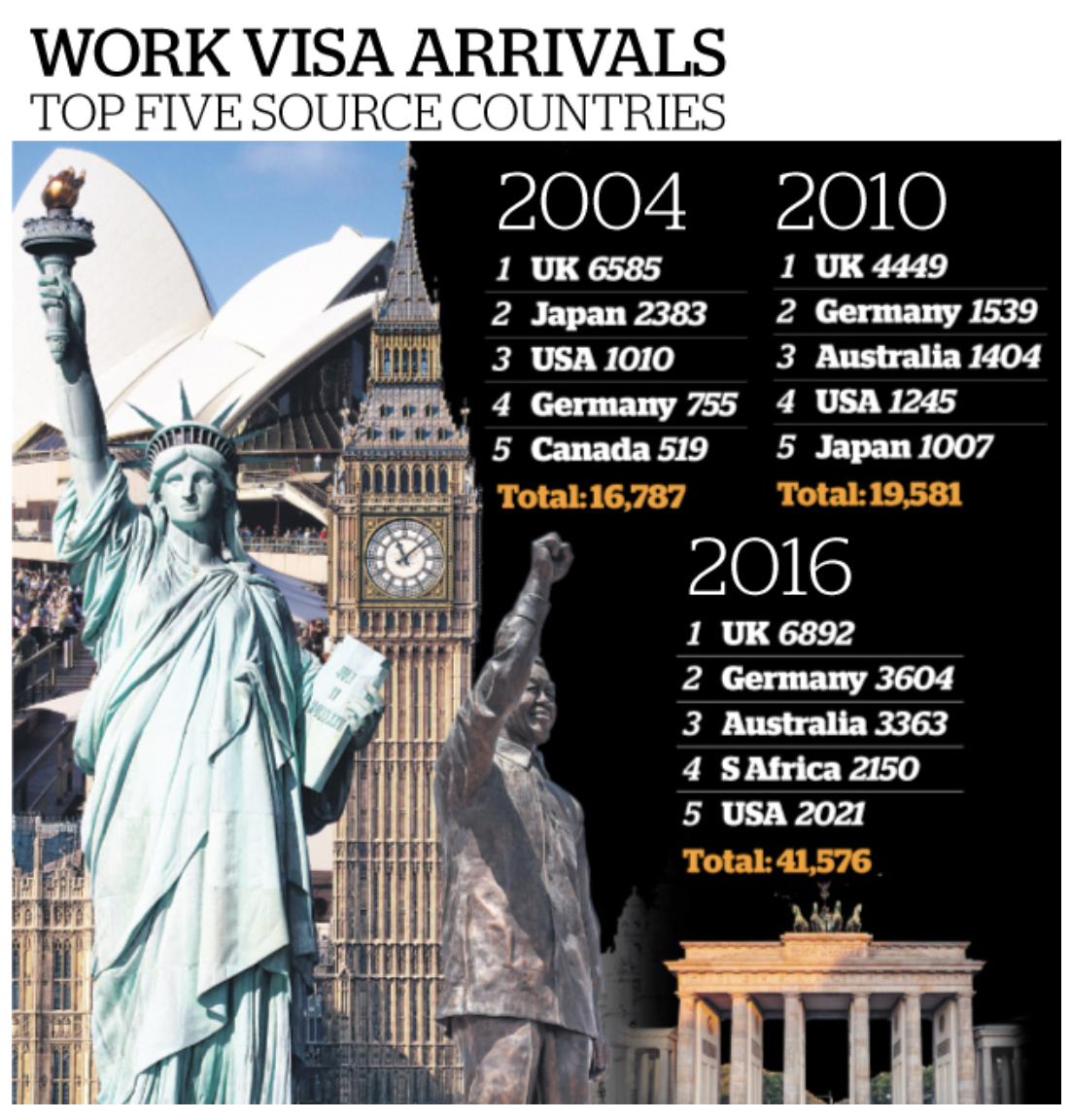
A Herald analysis into immigration data found work visa arrivals increased from 16,787 in 2004 to 41,576 last year.
The top five source countries for work visas last year are the United Kingdom, Germany, Australia, South Africa and the United States of America.
The United Kingdom, which made up 16.6 per cent of work visas issued, has twice as many as those of Germany on 8.8 per cent.
Figures to be released today by Statistics New Zealand is expected to again show strong population gains, and possibly a sixth straight month of net migration gains exceeding 6000.
The gain in the year to February 28 hit a new record high of 71,333.
The government last week announced changes to policy to tighten immigration, focusing on changes in the work visa skilled migrant category.
Excluding New Zealand and Australian citizens, most arrivals in the year to February (43,025) were on work visas.
Of the total 128,816 arrivals, 16,833 had residence visas, 23,846 student visas, 6338 visitors and 694 others.
Despite China and India being among the biggest source countries for permanent residents, they are not among the top five for direct migrant workers.
Massey University sociologist Paul Spoonley said migrant from Asian countries were less likely to get direct access to New Zealand on skilled work visa.
"They are more likely to transition to permanent residence through temporary work and study visa routes using options such as the transition to work provisions," said Professor Spoonley, an expert on immigration.
"Given the penetration, and now ownership, by Australians of industries and companies, a significant component of Australian migration to New Zealand will involve middle and senior managers, as well as certain experts, for these companies."
Australians do not require visas to work in New Zealand - the Statistics New Zealand figures however shows people coming from Australia as their last country of residence.
One source which has seen a huge increase in work visas is South Africa, rising from 2.5 per cent in 2004 to 5.5 per cent last year.
"The South African arrivals remain cyclical and the numbers arriving will reflect certain push factors as well as the fact that there is now a well-settled local community," said Spoonley.
Between 2004 and last year, the Philippines increased from 0.4 per cent to 4.5 per cent, or from 71 to 1871 work visas.
In the same period, Chinese arriving on work visas increased from 312 in 2004 to 1697.
"Filipino workers are filling important niches in the New Zealand labour market, including in the health and farming sectors, especially dairying," Spoonley said.
But he said recent changes to immigration policy including the suspension of the parent visa category will likely reduce the numbers coming from Asian countries including China, India and the Philippines.
In the year to February, the number of Indian student visa arrivals had already dropped by 38 per cent.
On the rise, however, are the number of arrivals from the UK and the USA.
Also, as a proportion, work visas for Germans have increased from 3.1 per cent of the total in 2004.
"My guess is that we are starting to see the effects of Brexit and the Trump presidency as push factors," he said.
"There was an early hint of a new interest from these two countries in the expressions of interest figures post the Brexit vote and the confirmation of Trump as president ... they might displace arrivals from Asia if this upward trend continues."
Spoonley said high value immigrants from the UK and US will remain and important source of skilled migrants, and expected the numbers to trend upwards through the mid and later part of 2017.
The increase in work visas pushed net migration to a record 70,600 last year.
Migrant arrivals numbered 127,300, compared with 56,7000 people leaving the country. During the period, work visas were up 3800 to 41,600, but this was matched by a similar drop in those arriving on student visas.
The United Kingdom comprised the largest group of visitors planning to work here on nearly 7000, followed by France, Germany and Australia.
In March ASB had forecast net migration would hit 72,000 in the year to March 31, and the annual gain would continue to top 70,000 until the second half of next year. Drivers of net migration include 9000 more Kiwis returning home and 28,000 fewer leaving since 2012.
There's also been an increase in the number of Australians moving here, and more working holiday visa holders.
International student arrivals dipped in the year to February, but are up 7000 overall since 2012.
New Zealand's population is estimated to be around 4.77 million, according to Statistics New Zealand, and growth rates at this level would increase it to 5 million in 2019.
Recent moves by the government to tighten immigration policy include increasing the number of required points, toughening of English language rules and the suspension of the parent category.
Last week, the government announced migrants will need to earn more than $49,000 to qualify for the skilled migrant visa.
Immigration Minister Michael Woodhouse said the changes were aimed at increasing the quality of migrants, and not reducing numbers.
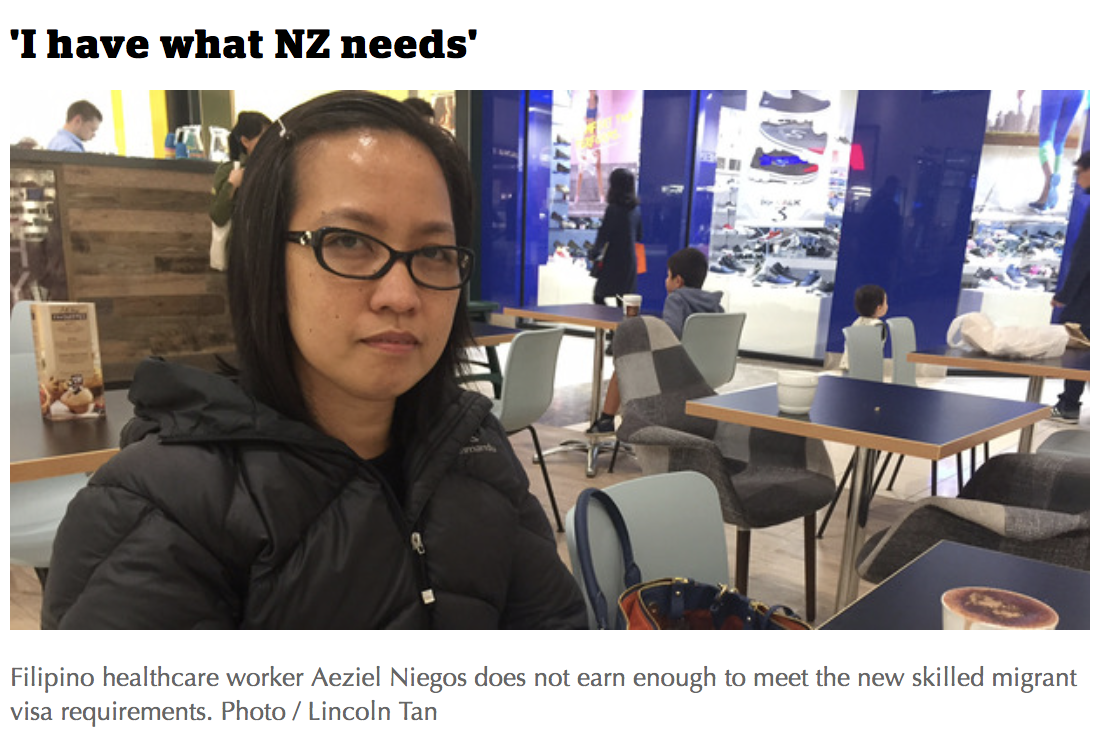
Health worker Aeziel Niegos came to New Zealand in 2008 with a dream of settling here and becoming a Kiwi.
But the 39-year-old, who is earns $19.54 an hour as a house leader in an Albany health care facility, said changes to Immigration rules will make that an "impossible dream".
"The skills that I offer is what New Zealand needs, what I do, I do it well, and help New Zealanders with multiple disabilities," said Niegos, a qualified nurse from Ilcos Norte in the Philippines.
"I was planning to clear my last hurdle, the IELTS test, before I can lodge my application but now they have moved the goal posts."
Niegos' said her application to register as a nurse was declined by the Nursing Council in 2014 because she had been out of practice for five years.
"So I dedicated my life towards helping the aged and sick Kiwis, and I have really worked hard to get to my position as house leader" she said.
"It is my passion to help the old and the sick, and I believe there is so much I can give to New Zealand."
A significant number of workers in the health care sector here are from the Philippines.
A starting pay for a registered nurse is $22.60 according to payscale.com, still below the required amount to qualify under the skilled migrant policy.
Many Filipino caregivers working in rest homes, private hospitals and disabled care units, like Niegos, are not registered nurses and earn minimum wage or just slightly above.
"I am still keeping faith, and praying everyday, that common sense will prevail," said Niegos, a Roman Catholic.
"If all of us have to leave New Zealand, it could seriously cripple the health sector."
(Source: Lincoln Tan, Harkanwal Singh, NZ Herald)
24/04/17 - Suspension of decision making authority
Immigration Minister Michael Woodhouse is taking steps to improve Immigration New Zealand’s decision making authority for cases involving residence class visa holders convicted of a criminal offence.
“Currently, Immigration NZ has the ability to make decisions on behalf of the Minister on deportation cases for some residence class visa holders convicted of a criminal offence,” Mr Woodhouse says.
“I have made my expectations very clear when it comes to deportation decisions involving offending of this nature and those expectations are not being met. So I am temporarily suspending Immigration NZ’s decision making authority until I have confidence that the decisions being made are consistent with my expectations.
“This course of action follows today’s New Zealand Herald article regarding an individual whose liability for deportation was suspended, despite the severity of the offending.
“It’s important we take the time to review the decision making process to ensure the right decisions are being made.
“I expect to be able to return the decision making authority to Immigration NZ within a fortnight, provided I can be assured the decision making process aligns with my expectations.”
(Source: Beehive)
Comment: What about other decisions involving other type of applications? Refer to Annual Report IPT.
18/04/17 - Changes to better manage immigration
Immigration Minister Michael Woodhouse today announced a package of changes designed to better manage immigration and improve the long-term labour market contribution of temporary and permanent migration.
“The Government is committed to ensuring inward migration best supports the economy and the labour market,” Mr Woodhouse says.
“It’s important that our immigration settings are attracting the right people, with the right skills, to help fill genuine skill shortages and contribute to our growing economy.
“That is why we are making a number of changes to our permanent and temporary immigration settings aimed at managing the number and improving the quality of migrants coming to New Zealand.”
Changes to permanent immigration settings include introducing two remuneration thresholds for applicants applying for residence under the Skilled Migrant Category (SMC), which will complement the current qualifications and occupation framework.
“One remuneration threshold will be set at the New Zealand median income of $48,859 a year for jobs that are currently considered skilled. The other threshold will be set at 1.5 times the New Zealand median income of $73,299 a year for jobs that are not currently considered skilled but are well paid,” Mr Woodhouse says.
“The SMC points table, under which individuals claim points towards their residence application, will also be realigned to put more emphasis on characteristics associated with better outcomes for migrants.
“Collectively these changes will improve the skill composition of the SMC and ensure we are attracting migrants who bring the most economic benefits to New Zealand.”
The Government is also proposing a number of changes to temporary migration settings to manage the number and settlement expectations of new migrants coming to New Zealand on Essential Skills work visas.
The changes include:
- The introduction of remuneration bands to determine the skill level of an Essential Skills visa holder, which would align with the remuneration thresholds being introduced for Skilled Migrant Category applicants
- The introduction of a maximum duration of three years for lower-skilled and lower-paid Essential Skills visa holders, after which a minimum stand down period will apply before they are eligible for another lower-skilled temporary work visa.
- Aligning the ability of Essential Skills visa holders to bring their children and partners to New Zealand with the new skill levels.
Exploring which occupations have a seasonal nature and ensuring that the length of the visa aligns with peak labour demand.
“I want to make it clear that where there are genuine labour or skills shortages, employers will be able to continue to use migrant labour to fill those jobs,” Mr Woodhouse says.
“However, the Government has a Kiwis first approach to immigration and these changes are designed to strike the right balance between reinforcing the temporary nature of Essential Skills work visas and encouraging employers to take on more Kiwis and invest in the training to upskill them.
“We have always said that we constantly review our immigration policies to ensure they are fit for purpose and today’s announcement is another example of this Government’s responsible, pragmatic approach to managing immigration.”
Public consultation on the changes to temporary migration settings closes on 21 May, with implementation planned for later this year.
(Source: Beehive)
18/04/17 - Pathway to residence for some South Island temporary migrants
Immigration Minister Michael Woodhouse today announced a one-off pathway to residence for around 4,000 long-term temporary migrant workers and their families living in the South Island.
“There has been a significant growth in the number of lower-skilled temporary migrants in the South Island who help fill genuine labour shortages and have become well-settled here,” Mr Woodhouse says.
“However, due to current temporary migration settings, many of these lower-skilled temporary migrants have no pathway to residence.
“Today’s announcement delivers on our 2015 commitment to provide that group of migrants in the South Island with a pathway to residence.
“The policy will allow eligible migrants to be granted an initial Work to Residence temporary visa, which would make them eligible for residence in two more years provided they stay in the same industry and region.
“Many of these migrants are already well settled in New Zealand and make a valuable contribution to their communities. The requirement to remain in the same region for a further two years after being granted residence ensures that commitment to the region continues.
“It will also enable employers to retain an experienced workforce that has helped meet genuine regional labour market needs.
“My National colleagues in the South Island have advocated strongly on behalf their constituents throughout the development of this policy, so I’m pleased the Government has been able to deliver on our commitment to enable this cohort of migrant workers to remain in their communities.”
To be eligible, temporary visa holders must:
- Currently be on an Essential Skills visa for a job in the South Island and have been on one in the South Island for five years or more.
- Be 55 years old or younger
- Hold current employment that is full-time and meets market rates and their employers would need to have no significant adverse record with the Labour Inspectorate or INZ.
- Meet standard residence health and character requirements.
(Source: Beehive)
18/04/17 - Speech outlining the Government’s plan for Immigration
Good Morning.
Thank you to the Otago and Queenstown Chambers of Commerce for hosting this event.
Ladies and Gentlemen, thank you for the opportunity to speak to you today. It’s a pleasure to be here.
It’s a fitting place to be talking about immigration. This region has been a rich part of New Zealand’s immigration story since the gold mining days of the 1860’s and remains one of the country’s premium destinations for overseas visitors, working holiday makers and other visa holders.
Dougal tells me it was actually the Otago Chamber of Commerce who invited Chinese gold miners to work the Central Otago fields over 150 years ago. So the Chamber as host and this location is highly appropriate for me to outline the Government’s next steps for immigration.
Immigration has definitely been a significant talking point over the last year, so I’m not surprised to see so many of you here today to talk about it.
The National-led Government believes New Zealand should be open to the rest of the world and immigration helps do that by encouraging innovation and deepening our links with international markets.
We want our businesses to have access to new and emerging markets, and we want to maximise the contribution immigration can make to our economy, with a clear focus on building our regions and supporting our sectors to grow.
So at a time when we are doing so well as a country, the focus on immigration is of course heightened.
But there’s a lot more to the immigration story than what you see or hear in the media.
Today, I want to look at the benefits migrants bring to New Zealand, before outlining the Government’s plan for immigration.
But before I get to that, I want to spend some time talking about the economy, and the strong position we are currently in as a country.
Economic Outlook
At a time when many parts of the world face significant political and economic risks, New Zealand is fundamentally doing well.
We are one of the fastest growing economies in the developed world.
That growth is driven mainly by the opportunities provided by our export markets, our global competitiveness, our high skill levels, our confidence to invest, and the resourcefulness and adaptability of Kiwi businesses.
It’s also backed up by this Government’s clear plan for the future.
And with that growth comes more job opportunities and higher wages for New Zealanders.
We’ve seen very strong employment growth over recent years. The economy has seen 328,000 jobs created since 2008; and a further 150,000 are expected by 2021.
The average annual wage, which is currently $58,700 and has been growing at twice the rate of inflation, is expected to reach $66,000 by 2021.
The most recent Household Labour Force Survey reported that for the first time ever we have 2.5 million people employed in New Zealand.
Our employment rate – the proportion of the total population aged 15 years or older in work – is 66.9 per cent. This is a record for New Zealand, and the second highest employment rate in the whole of the OECD.
So, as a country, we are well placed to grasp the many opportunities ahead of us.
Immigration context
It’s easy to see why people are keen to come here.
New Zealand is continually ranked as one of the best countries in the world for ease of doing business. We are renowned for our great lifestyle, safe and friendly communities, good public services and a clean and green environment – all underpinned by a stable government and a growing economy.
As the Prime Minister has said, it’s no wonder more kiwis are coming home, fewer are leaving and more people from all round the world want to come here. That’s a vote of confidence in this country and something we should be celebrating.
But a growing economy also creates some challenges.
That’s why as a Government we are investing heavily in the infrastructure needed to support this growth right across the country.
We’re expanding the roading network, the rail network, electricity transmission, ultrafast broadband and social infrastructure like schools and hospitals.
Here in Queenstown for example, we are currently building the new two lane Kawarau Falls Bridge, and we are investing jointly with the Queenstown Lakes Council on the new $22 million Eastern Access Road.
The Eastern Access Road is a critical link in Queenstown’s transport network which will help relieve congestion through the Frankton Flats area, bypassing the airport and connecting Remarkables Park to Frankton-Ladies Mile. It’s due to be built by the end of this year.
We’ve also invested $18.5 million in the new Shotover Primary School, and we are currently considering the timing of the planned expansion of Wakatipu High School to 1800 pupils.
To ensure our economy continues to grow, we must grow our companies, and that means they must be able to add more skilled staff.
We can and do train New Zealanders for those roles but fast-growing industries like viticulture, horticulture, fishing, farming, IT, construction and high tech manufacturing often need more experienced people than a small country can immediately provide.
And that’s where immigration can help.
Despite positive initiatives to place Kiwis into those growing jobs it is necessary now, and likely for the foreseeable future, that part of that employment demand will need to be met from overseas.
To restrict that would put our strong positive growth at risk and cost Kiwi jobs and export earnings.
We’ve seen a strong turnaround in net migration, from a net outflow of around 4,100 in the year to February 2012, to a net inflow of 71,300 in the year to February 2017.
It’s important to look behind the headline numbers and identify the main drivers of that turnaround which are:
- 9,000 more Kiwis returning home and 28,000 fewer leaving making up around half of that change.
- 21,000 additional Working Holiday Visa holders
- 7,000 more international students arrivals
- 3,000 more Australians moving here each year
These areas alone account for around 58,000 people each year.
We, of course, can’t stop Kiwis from returning home – and we don’t want to.
And there are areas we are cautious about restricting due to the possible negative impacts.
Restricting the number of working holiday makers for example, would have a reciprocal effect on New Zealanders wanting to travel or study abroad.
And cutting international students would have a major impact on one of our most successful industries and our fifth largest export earner.
But while we don’t want to stop Kiwis returning to New Zealand, there are other migration pathways that we can and do actively control.
We constantly monitor and change the settings depending on the number of people wanting to move here, and the need for international labour.
And today I want to take you through some new steps to control both the number and quality of people migrating to New Zealand.
The areas I think would be of most interest and concern to the public are the numbers of people gaining residence or obtaining temporary work visas where it is necessary to pass the labour market test.
Interestingly, while demand for Residence Visas has no doubt increased, volume is controlled by the planning range settings that ensure the numbers are maintained at the long term average.
As I have said before, we have a Kiwis first policy but it’s not always possible to find Kiwis to do the work. Earlier this year, I spent a few weeks visiting the regions where they are screaming out for more workers.
You will have heard me talk about the barriers to employment that exist for some New Zealanders – location, skills, training, attitude, drugs and alcohol.
This Government has done more than any other to ensure those barriers are removed, and for some those barriers are significant. But we don’t give up on them. We are continuing to increase the number of youth in training and employment. But it the meantime, the fruit needs to be picked, the grapes harvested and employers need the workers do those jobs.
That’s why we have labour market tested temporary visas known as Essential Skills Work Visas. As you will know, this is when employers are required to prove that there is no Kiwi ready and available to do the job.
And it is the trend of these types of visas that I believe are the best proxy for whether there is labour market displacement occurring.
Temporary Visas
Much of the commentary I referred to earlier would also have you believe that the number of Essential Skills visas being issued had increased. In fact, until last year the volume of these visas had steadily decreased by more than a third since the National-led Government came to office.
We are determined to ensure that Kiwis benefit from our growing economy and labour market, and we are working closely with industries that rely on overseas workers to ensure they are diligent in their workforce planning, attraction and retention of New Zealand workers as a prerequisite to accessing overseas labour.
Most of those industries would say that it has actually become more difficult to recruit from overseas. And the Government makes no apology for this. We are absolutely committed to the principle of Kiwis first.
However, it’s about more than just the number of work visas issued. It’s about the conditions that are set for those workers and ensuring that the duration of stay and the likelihood of a pathway to residence is clearly understood.
A material number of Visa holders have been here for many years, despite having little or no chance of gaining residence. It is important that we continue to allow access to overseas labour where necessary, but to ensure that those workers are clear about their future prospects.
Immigration policy, under successive governments, has been about making medium-term settings and accepting that there are fluctuations in migration around that.
Recent NZRP changes
Because of the increase in demand, in October last year we made some changes to immigration settings to keep on top of the number of people gaining residence in New Zealand.
We increased the number of points required to gain residence under the Skilled Migrant Category,
We toughened English language rules and suspended the Parent category for new residents.
These changes will both stop the growth in residence numbers and prioritise access for higher-skilled migrants - striking the right balance between attracting skilled workers that allow companies to grow and controlling immigration in a period of strong growth.
Early evidence suggests the changes are working. The bar has been raised, and the number of people being selected to apply for residence has dropped by almost 50 per cent.
It’s a little early to say whether or not that reduction will be permanent, but there is no doubt that those changes have had the effect of both controlling the number, while at the same time increasing the average skill level of our skilled migrants.
And the net inward migration numbers have now plateaued, rather than increasing.
Migration has remained at higher levels for longer than most forecasters expected, but in certain sectors there is a genuine need for those migrants to help fill skill shortages.
It is important that we are attracting the right people, with the right skills. That’s why we constantly monitor our immigration settings to ensure they are fit for purpose.
So where the changes in October largely focused on the number of migrants, I’m pleased to announce today further changes to further control the number and improve the quality of new migrants coming to New Zealand.
Introducing Remuneration Bands
Firstly, we plan to introduce remuneration thresholds for both permanent and temporary skilled migrants.
Remuneration is an excellent proxy for skills - and will complement the qualifications and occupation framework to ensure the Skilled Migrant Category selects higher-skilled and higher-paid migrants.
Two remuneration thresholds are being introduced.
The first remuneration threshold will be set at the New Zealand median income – around $49,000 per year.
Anyone who earns less than that amount will no longer be classified as highly-skilled – regardless of whether their job may have been classified that way previously.
Permanent residence applicants will no longer be able to claim points for jobs that are considered skilled but are paid below the median income.
We are also proposing that those eligible for a temporary ‘Essential Skills’ work visa but who earn less than the threshold will still be able to work here, however they will be limited to a maximum time in country duration of three years.
Partners and children of these lower-skilled work visa holders are presently able to obtain open work visas and student visas that allow them to attend primary and secondary school in New Zealand as domestic students.
Under these changes, we propose that partners and children will be able to come to New Zealand as visitors and will only gain a work visa if they meet visa requirements in their own right.
We also propose that those occupations that are seasonal in nature will have visas issued for the duration of the season, rather than for twelve months as is presently the case. We will be consulting with industries to ascertain what occupations would fall into that category.
Together, these changes aim to encourage higher-skilled workers to come to New Zealand, so a second threshold will also be set at one and a half times the median income – around $73,000 per year.
Anyone who earns more than that amount will automatically be classified as highly skilled.
Permanent residence applicants will be allowed to claim points for jobs that are not currently considered skilled, but are paid above the higher threshold.
And temporary work visa holders earning over the threshold will automatically be classified as higher- skilled, meaning they will not be subject to the same time in country constraints as those considered lower-skilled.
Introducing these thresholds is about creating a balance – a balance between ensuring employers can meet genuine labour shortages by using people from overseas, while at the same time ensuring those lower skilled migrants are coming here with a clear understanding of their visa conditions.
In fact, there will be some workers who are now likely to be eligible for residence for the first time such as outdoor adventure instructors, heavy machinery operators and experienced workers in the construction and oil and gas industry.
Migrants already in New Zealand should know that they would not be immediately affected - the new requirements would only apply to visa applications made after the policy is introduced.
I also want to make it crystal clear that employers will be able to continue using migrant labour when they can demonstrate a real labour or skills shortage and that they cannot find New Zealanders for the job.
But we’re also setting a challenge to employers to take on more New Zealanders and invest in the training needed to upskill them.
South Island Pathway to Residence
I also want to cover one final issue.
As a result of the sustained demand for labour, there has been a significant growth in the number of lower-skilled temporary migrants in the South Island who help fill genuine labour shortages and have become well-settled here.
In fact there are around 4,000 migrant workers and their families who have been living in the South Island for more than five years, but who have little likelihood of gaining residence under current settings.
So, on top of the proposed changes I’ve just announced to our temporary migration settings which will prevent this situation from reoccurring, I’m pleased to also announce a new policy to provide a one-off pathway to residence for those lower-skilled temporary migrants already in the South Island.
Eligible migrants will be granted an initial Work to Residence temporary visa, which will make them eligible for residence in two more years provided they stay in the same industry and region.
Many of these migrants are already well settled in New Zealand and make a valuable contribution to their communities. The requirement to remain in the same region for a further two years after being granted residence ensures that commitment to the region continues.
This last announcement delivers on the Government’s 2015 commitment to provide this group of people with a pathway to residence, and enables employers to retain an experienced workforce that has helped meet genuine regional labour market needs.
Conclusion
Ladies and Gentlemen, the Bill English led-Government has a clear plan for the future, with a focus on building our regions and supporting our sectors to grow.
And our immigration settings have a key role to play in achieving that. But it’s important that we continue to control both the number and quality of people migrating to New Zealand.
The changes announced today are about striking the right balance between enabling employers to continue to access migrant labour where there are genuine skills shortages and improving the quality of new migrants coming to New Zealand.
They also reinforce the temporary nature of work visas which will help reduce expectations of settlement from temporary migrants with no pathway to residence.
Permanent and temporary migrants make a significant contribution to our economy and the Government is committed to maximising that contribution by focusing on the selection, attraction and retention of higher-skilled migrants.
We’re confident that these changes will help improve the long-term labour market contribution of temporary and permanent labour migration.
Thank you.
(Source: Beehive)
04/04/17 - Kiwis misled by migration myths in election year
Kiwis misled by migration myths in election year
Kiwis are being misled about migration in a political game that is all about winning votes through the propaganda fed to us, says Ms June Ranson chair of the New Zealand Association for Migration and Investment (NZAMI).
“One of the big myths being pedalled by politicians is that migration numbers are increasing and having a negative impact on housing shortages, house prices, infrastructure, job shortages and job competition.
“All of this propaganda is painting a totally false picture of the situation. It is alarming the public and causing the current Government to react to show they are listening and competing in the ‘game’ to win the election.”
NZAMI, New Zealand's leading professional association for immigration specialists, says this negative publicity towards migrants could be costly for New Zealand.
“The political parties know that there is a cost to high levels of immigration but it is greatly outweighed by the benefits that migrants bring to NZ.”
Ms Ranson says that the statistics provided by Statistics NZ and released recently by the NZ Initiative show that, as at June 2016, New Zealanders returning home was one of the main reasons people were coming into the country.
- 31% for work only – temporary stay
- 29% NZ & Australian citizens (New Zealanders returning home)
- 22% international students
- 12% residence – migrants here for the long term
- 5% visitor
- 1% other
“New Zealand’s positive economic climate means thousands of Kiwis are choosing to move back home, even as fewer choose to leave.”
Ms Ranson says migrants contributed a net $2.9 billion to the government’s books in 2013.
“One would assume that in the past three years these figures have increased. On a per capita level, this would be equivalent to $2,653 per migrant. Native-born New Zealanders contributed a net $540 million to the country’s revenue or $172 per person.
Ms Ranson says the economic benefit of migrants has not decreased and the country needs them because productivity by the average New Zealander is low by comparison.
“If there are pressures on housing and other infrastructure why was there not better planning by successive governments to support the economic development of the country? Are migrants just a convenient scapegoat for poor planning?” asks Ms Ranson.
About NZAMI
The NZAMI is made up of lawyers and licensed immigration advisers who must uphold professional standards and comply with the Association’s strict Code of Ethics. This Code requires them to uphold the integrity of the New Zealand immigration system and to respect the vulnerability of migrants at all times. For more information please see:
www.nzami.co.nz.
(Source; Press Release NZ Association for Migration and Investment)
02/02/17 - As the US closes the door on some, New Zealand gets set to welcome more global entrepreneurs
While the US squabbles over whether immigrants should be let into the country, The Edmund Hillary Fellowship and Immigration New Zealand have launched a new visa and programme to attract international entrepreneurs to our shores.
After Donald Trump signed a sweeping executive order restricting immigration from seven Muslim-majority countries, Silicon Valley was left scrambling.
The California-based hotbed for innovation has long benefited from immigration.
Over half (51 percent) of the billion-dollar start-ups created in Silicon Valley were founded by immigrants, while many more are employed by the companies that reside there.
Google said almost 200 of its staff were affected by Trump’s order, while Microsoft said over 70 of its employees were.
Meanwhile, it was revealed US tech investor and Trump advisor Peter Thiel was granted citizenship to New Zealand in 2011 – a place he calls a “utopia” and has invested millions of dollars into via businesses like Xero.
It’s timely, then, that the Edmund Hillary Fellowship (EHF) launched Tuesday in New Zealand.
It’s a programme named after Sir Ed for his boldness by the Hillary Institute for International Leadership and Kiwi Connect, an organisation promoting entrepreneurship in New Zealand.
It’s been created in partnership with Immigration New Zealand to encourage global entrepreneurs, investors and startup teams to New Zealand’s shores to tackle some of the world’s biggest problems.
Up to 400 are expected to come and work with up to 20 Kiwi entrepreneurs each year, who will benefit from the global network at their fingertips.
Pre-launch, Edmund Hillary Fellowship CEO Yoseph Ayele says the Fellowship had already received over 350 messages of interest from people based in 74 different countries.
While the culturally diverse Silicon Valley frets in the US, Ayele says New Zealand has never been more attractive for international entrepreneurs to start a business.
“What makes New Zealand so attractive is that there’s a high level of tolerance and acceptance and there’s new opportunities for creative people that are hungry and want to build valuable projects. That resonates with people all over the world,” Ayele says.
“It values egalitarianism, conservation, access to healthcare and education across the whole country, religious freedom and anyone can get married.
“All those things really appeal to entrepreneurs because they want to be part of ecosystems that align with their values, but also ecosystems it won’t be hard to recruit for.”
Part of the drawcard of the programme is a new visa created by Immigration New Zealand called the Global Impact Visa, which gives EHF participants a three-year open work visa to live and work in New Zealand and grow a global business.
Eligibility for residence becomes available after 30 months in the programme.
Ayele himself knows of the difficulties of immigration.
Originally from Ethiopia, he has lived abroad in six different countries and co-founded a tech start-up in Silicon Valley.
However, he wasn’t able to get a long-term visa in the US because his academic qualifications didn’t match the immigration database.
“That helped me understand how traditional immigration paths can easily miss what they were set up to achieve,” he says.
The Global Impact Visa is a massive help to international talent looking to immigrate, he says.
“It embraces the brightest and best active global entrepreneurial talent who may not be able to qualify for other visa categories but have the drive, capability and connections to create great value for New Zealand.”
EHF is agnostic about the type of venture candidates want to get into, but their business must tackle a problem that matters and has significance around the world, Ayele says.
“Climate change is a big [problem], inequality and the future of work is another, as a lot of work is being mechanised, as is access to education and disrupting education systems,” he says.
This opens up the opportunity to for profits, not-for-profits and hybrid companies.
Examples of candidates who’ve already applied include a lecturer from Harvard who’s invented solar stoves for rural communities and a couple with over 30 years of experience in space innovation and technology who want to democratise space.
Online applications are open from 31 January 2017 and are open all year.
The EHF will select the first cohort of international and Kiwi candidates by the second half of 2017 and select a new candidate every six months.
Ayele says he hopes it will lead to a lot of new jobs, new ideas and new opportunities for the next generation of New Zealand entrepreneurs.
“We want to create success stories that breed success stories. What you find in a lot of great start-up ecosystems is people that succeed in that ecosystem invest back in where they succeeded. We saw that after the sale of Trade Me and you see what that helped create, so what we’re trying to create with this.”
(Source Idealog, Elly Strang)
23/02/17 - Clampdown on rogue employers
Immigration Minister Michael Woodhouse has today announced new measures to stop employers who breach immigration and employment law from recruiting migrant workers.
“Migrant workers make a valuable contribution to our workforce and have the same rights as any other worker,” Mr Woodhouse says.
“It is simply unacceptable that those employers who exploit migrant workers are still able to recruit from the international labour market and disadvantage those employers who do the right thing.
“That’s why the Government is introducing stand-down periods during which time employers who flout the law will be banned from recruiting further migrant workers.
“Employers who have incurred an employment standards-related penalty will be banned from recruiting migrant labour for defined stand-down periods ranging from six months to two years, depending on the severity of the case.”
Published guidelines and criteria will ensure that stand-down periods are applied fairly, consistently and transparently.
“Access to the international labour market is a privilege, not a right and if employers abuse that privilege by exploiting migrants or failing to comply with employment law, there will be consequences,” Mr Woodhouse says.
The changes will come into effect on 1 April 2017.
Note to Editors:
- The new measures will apply to all employers intending to recruit labour market-tested migrant workers, including employers who are: supporting work visa applications and approvals in principle; seeking accredited employer status or supporting residence class visa applications based on employment; and employers who are part of the Recognised Seasonal Employer scheme.
- Employment standards-related penalties extend from formal infringement notices issued by the Labour Inspectorate (following a Labour Inspectorate investigation) through to penalties issued by the Employment Relations Authority or the Employment Court, a declaration of breach or banning order issued by the Employment Court. Employers issued with penalties as a result of private actions taken by employees either through the Employment Relations Authority or the Employment Court will also be included.
- The threshold for non-compliance would not include employers at the very minor end of breaches, such as those who have entered into an enforceable undertaking with the Labour Inspectorate. These are employers with mostly adequate wage and time records who demonstrate a desire to comply by agreeing with a Labour Inspector to a written undertaking for how and when they will rectify their breaches.
- While non-compliant employers would not be eligible to recruit further migrant workers for the duration of their stand-down period, some employers who meet the threshold for non-compliance with employment standards will already have migrant workers in their employment. These employees will be able to work out the duration of their work visa, but will not be granted further work visas to work for the non-compliant employer.
(Source: Beehive)
23/02/17 - Protecting vulnerable workers - Note for Employers
On 1 April, the Ministry of Business, Innovation and Employment (MBIE) will enforce stand-down periods for non-compliant employers who breach employment standards. Those employers will NOT be able to recruit migrants for a period of time after an infringement.
Today, 23 February 2017, the Minister for Immigration and Workplace Skills and Employment will announce measures to restrict access to migrant labour by employers who have incurred employment standards-related penalties. These new measures demonstrate that the exploitation of workers - including migrants who may be less likely to be aware of their rights and entitlements than New Zealand workers - will not be tolerated.
New Zealand employers must comply with New Zealand’s regulated minimum employment standards, and this is reflected in current immigration instructions. The new measures will provide a defined threshold and will mean that, in situations where an employer has incurred a penalty for a breach of employment standards, there will be a set stand-down period preventing them from recruiting migrant labour for either six months, one year, 18 months, or two years, depending on the severity of the breach.
The new measures have been designed for a 1 April 2017 implementation date. For employers who have incurred penalties or infringement notices before 1 April 2017, while no formal stand-down period will be applied, INZ will have a list of these employers and visa applications will be judged against immigration instructions which require compliance with employment law.
Questions and Answers
WHY AREN’T NON-COMPLIANT EMPLOYERS ALREADY RESTRICTED FROM EMPLOYING MIGRANTS?
All employers have to comply with regulated minimum employment standards and this is reflected in current immigration instructions. But there isn’t a clear threshold set for when non-compliance with employment standards becomes unacceptable for immigration purposes (as opposed to non-compliance of a very minor or accidental nature).
These new measures provide a threshold and will mean that, in situations where an employer has incurred a penalty for a breach of employment standards, there will be a set stand-down period preventing them from recruiting migrant labour for either six months, one year, 18 months, or two years, depending on the severity of the breach.
WHAT KIND OF PENALTY IS INCLUDED?
Employment standards-related penalties extend from formal infringement notices issued by the Labour Inspectorate (following a Labour Inspectorate investigation) through to penalties issued by the Employment Relations Authority or the Employment Court, or banning order issued by the Employment Court.
Employers issued with penalties as a result of private actions taken by employees either through the Employment Relations Authority or the Employment Court are also included.
WHAT IF A BREACH IS MINOR
The threshold for non-compliance does not include employers at the very minor end of breaches, such as those who have entered into an enforceable undertaking with the Labour Inspectorate, have mostly adequate wage and time records and demonstrate a desire to comply. The intention is not to restrict access to migrant labour for minor and inadvertent breaches, and so the threshold is set at formal infringement notices and above.
HOW WILL THIS BE GIVEN EFFECT TO?
The Minister will make an addition to the existing immigration instructions
A list of non-compliant employers will be produced and maintained by the Labour Inspectorate and shared with Immigration New Zealand to ensure that employers on the list are not able to recruit migrant labour.
Employers who meet the threshold for non-compliance will be informed of their stand-down period preventing them from recruiting migrant labour, and when their non-compliant status will expire
WHAT RIGHT OF REPLY WILL AN EMPLOYER HAVE WHO’S HAD A STAND-DOWN PERIOD IMPOSED?
There are various means currently available for employers to challenge all final enforcement action decisions. These range from:
- the right to request a hearing at the District Court for infringement notice
- challenging an Employment Relations Authority determination seeking a hearing at the District or Employment Court
- appealing a District or Employment Court decision.
If, as a result of an employer’s challenge, the decision regarding their penalty is overturned, then the employer would again become eligible to recruit migrant labour.
HOW WILL THE LENGTH OF THE STAND-DOWNS BE DETERMINED?
The stand-down period will be proportionate to the seriousness of the breach, and therefore the penalty amount. There will be a fixed gradation aligned with the level of the penalty. For example, when a penalty is issued to a company:
- a 6 month stand-down will apply for a penalty up to and including $1000
- a 12 month stand-down will apply for penalties over $1000 but less than $20,000
- an 18 month stand-down will apply for penalties of $20,000 and over but less than $50,000
- a 24 month stand-down will apply for penalties of $50,000 and above.
HOW MANY EMPLOYERS WILL THIS AFFECT?
A precise figure is not available but the figures for those employers who incurred penalties over the past year give a rough indication of the potential number of employers who might meet the non-compliant threshold.
- 47 infringement notices (with 20 issued to employers of migrants) were issued by the Labour Inspectorate in the six months since infringement notices took effect in July last year.
- 72 penalties (with 25 of those issued to employers of migrants) were issued in 2015/16 financial year by the Employment Relations Authority for cases filed by the Labour Inspectorate.
- 16 penalties were issued to employers of migrants by the Employment Relations Authority for cases taken independently of the Labour Inspectorate 2015/16 financial year.
WHAT TYPE OF EMPLOYERS WILL THIS AFFECT?
The new measures will apply to all employers intending to recruit migrant labour, including those employers who are: supporting work visa applications and approvals in principle; seeking accredited employer status or supporting residence class visa applications based on employment; and employers who are part of the Recognised Seasonal Employer scheme.
HOW WILL THE PROPOSAL AFFECT BUSINESSES WHO RELY ON MIGRANT WORKERS?
The changes will not increase the powers of either labour inspectors or immigration officers. There will be no impact on compliant employers. There will, however, be an impact for some non-compliant employers who may consider the ability to recruit migrant workers as an entitlement rather than a privilege.
Improving the process for restricting access to migrant workers for non-compliant employers should also help to improve access for those employers who are compliant, creating incentives for employers to ensure they are complying with all their employment obligations.
WHAT HAPPENS IF EMPLOYERS ARE FOUND TO BE NON-COMPLIANT AND ALREADY HAVE MIGRANT WORKERS IN THEIR EMPLOYMENT?
These employees will be able to work out the duration of their work visa, but will not be granted further work visas to work for the non-compliant employer.
WILL THERE BE FLEXIBILITY TO ALLOW FOR SITUATIONS WHERE LABOUR MARKET NEEDS CHANGE – SUCH AS A HIGH DEMAND FOR CERTAIN SKILLS AS A RESULT OF EARTHQUAKES, FOR EXAMPLE?
Yes. As is currently the case, there is flexibility for situations such as changing labour market needs following an earthquake or other significant event. In such situations, where an employer is deemed to be non-compliant but specific circumstances may warrant an exception, the Minister of Immigration (or a delegated decision maker) would be able to grant a visa as an exception to immigration instructions. This would mitigate the risk of restrictions being applied in circumstances that were patently unreasonable, manifestly disproportionate or not in the national interest.
WILL THERE BE ADDITIONAL COSTS ASSOCIATED WITH IMPLEMENTING THIS?
Any costs associated with implementing this proposed change will be met from within current baselines.
WILL THIS ONLY AFFECT EMPLOYERS WHO ARE PENALISED THROUGH THE LABOUR INSPECTORATE?
No. Employers who are taken to the Employment Relations Authority or to the Employment Court independently of the Labour Inspectorate will also be subject to stand down periods.
WILL THIS NEW MEASURE ONLY PROTECT MIGRANT WORKERS – NOT LOCAL WORKERS?
Local workers are protected by the existing employment standards regulatory and penalty regime. The right to recruit migrant workers is an additional privilege for employers and so we are putting constraints on that to ensure that non-compliant employers can’t have ready access to the international labour market as well. When the breach is particularly serious a banning order can be put on employers and this can prevent them from employing anyone (local or otherwise) for a period of up to 10 years.
(Source: INZ)

13/02/17 - Religious leaders speak out over Indian students' deportation
A group of Indian students claimed symbolic sanctuary in a central Auckland church after Immigration New Zealand threatened to deport them
Leaders from three of New Zealand's biggest churches are backing a group of Indian students who are facing deportation.
The religious leaders, from the Roman Catholic, Anglican and Methodist churches, released a joint statement on Monday in support of the students, who were given deportation orders after the Government learned they arrived on fraudulent visas.
The students said they and 190 others had been ripped off by Indian immigration agents, who lied on official forms without their knowledge.
The students' plight has garnered support from unions, political groups and members of the public.
A decision is expected this week on whether they can remain in the country.
The nine students and a toddler have been staying at the Unitarian Church in Auckland's Ponsonby since last Monday, in symbolic sanctuary.
Cardinal John Dew, the Archbishop of Wellington, Philip Richardson, the Archbishop and Primate of the Anglican Church of Aotearoa New Zealand and Polynesia, and Reverend Prince Devandanan, the President of the Methodist Church of New Zealand, said they believed the students had never intended to deceive the government.
"Having looked at their situation it seems to us that these students have been duped by unscrupulous immigration agents in India," Richardson said.
"In previous similar cases we understand that where documentation had been deemed falsified by immigration agents then the group was allowed to stay."
Most of the students were taxpaying workers, according to their visa conditions, and they were contributing to the New Zealand economy, the statement said.
They could not draw New Zealand benefits because they were not citizens or residents.
Immigration New Zealand seemed to have erred in its processes and the actions of the immigration agents needed careful scrutiny, the religious leaders said.
Dew called on the government to "reconsider" the students' cases.
"We do so on the basis of concern for the human situation of the students, our Christian responsibility to care for 'the stranger, the widow and the orphan' among us, and a concern for just application of NZ's immigration policy."
Immigration lawyer Alastair McClymont said on Monday that the students remained at the church.
"I was told on Friday by Immigration New Zealand that they weren't going to take any action over the weekend," he said.
"We're expecting something in the next two or three days, one way or another."
Immigration Minister Michael Woodhouse said earlier that people were ultimately responsible for the accuracy of their visa documentation.
He said it was no excuse for the students to claim they were unaware of their agents' activities.
Immigration NZ's general manager for visa services, Steve Stuart, said the students had exhausted their options to remain in the country.
They have been invited to leave voluntarily, or "arrangements will be made for them to be deported".
(Source: Stuff)
Covid 19 Notice
As the impact of the coronavirus continues to evolve, we face this unprecedented situation together. The pandemic is affecting all of us. At Terra Nova Consultancy Ltd we wish to reach out and update you on how we are addressing it. Our top priority is to protect the health and safety of our employees, clients, and our communities. Our focus on customer service remains at the center of everything we do, and we are fully committed to continue to serve you with our services, and striving to provide our services without interruption.Please listen and act upon the advise given by the Government, only in that way will we together be able to combat this challenge. And as always, stay healthy and keep safe.
TNC E-books
The Terra Nova e-book page contains publications in e-book and e-news format containing comments and reviews from Terra Nova Consultancy Ltd, and other contributors, that relate to a number of issues from immigration to operating a business.
Some of the Terra Nova e-books e-book and the Terra Nova e-news issues we believe may be quite helpful for prospective immigrants.
Check back regularly to find new editions of our Terra Nova e-book and Terra Nova e-news range.
Quick Links
Translate this site
Contact Details
Terra Nova Consultancy Ltd
165A Old Railway Road
Kumeu
New Zealand
Please arrange visit by appointment.
Mobile: +64 275 706 540
Postal Address:
as above
Licensed Immigration Adviser
Johannes Petrus (Peter) Hubertus Cornelis Hendrikx

License number: 200800214
Is your Immigration Adviser
licenced by the NZ Government?
Click here for details www.iaa.govt.nz