
.|

NEWS
A variety of immigration, business and general news articles taken from New Zealand newspapers, websites and other sources (sources are mentioned at the bottom of each article) and selected by Terra Nova Consultancy Ltd. It may assist the reader being more or less up-to-date what is happening in Aotearoa, "the Land of the Long White Cloud". Happy reading, enjoy ... and if you have any questions on these updates - please contact us...
Newest article always on top.
21/10/17 - Jacinda Ardern: Labour hasn't budged on its immigration policy
Labour's immigration policy is unchanged following negotiations with NZ First, Jacinda Ardern has revealed.
In an interview with The Nation on Saturday morning, when asked where the "sweet spot" was in the contentious issue, the Prime Minister-elect said: "You'll see Labour's policy remains absolutely unchanged as a result of these negotiations."
Under that policy, Labour estimates net migration will fall by 20,000 to 30,000 a year, mostly by limiting the number of people granted student and work visas. (In the year to June 2017, net migration was 72,305.)
NZ First campaigned on reducing net migration to just 10,000 people per year.
(Source: Stuff, The Dominion Post)
22/10/17 - Will Government change Employment Law?
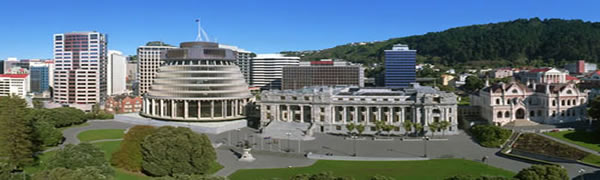
The main announcement has been made and now we await the details of the new coalition Government. All commentators so far suggest that a number of significant changes are likely with employment legislation. While at this time we do not have the details and positions may change based on the coalition arrangements we can be guided by the three parties policy statements concerning employment.
With Labour at the helm we should expect them to deliver on their pledge to strengthen the role of Unions and collective bargaining. The other two parties appear to have less to say on this topic and we expect that they will support the changes as they are put forward by Labour. The Labour Party reference to ‘Fair Pay Agreements’ could suggest a move to the labour market system in place in Australia or possibly a legislative minimum covering all terms and conditions of employment.
All the coalition partners share a belief that the minimum wage should be increased. There have been a number of messages about this with comments on the ‘living wage’ and a suggested minimum rate of $20 per hour being put forward. It would be reasonable to assume that the minimum wage will move in the short term but by just how much remains to be seen, although Labour has quoted a rate of $16.50 per hour as a first step.
The other main shared pledge is to strengthen the employment rights of those engaged in casual and fixed term positions, extending to seasonal work, labour hire arrangements and dependant contractors. Together with this we may see greater employee protection in cases of business restructure and redundancy. The overall thrust of these policies is to reduce the perceived adverse effects of the casualisation of the workforce and to increase job security. We should expect that the current 90 day trial period will be significantly amended or removed as a first step.
We will keep you advised as the new Government’s employment policies are developed.
(Source: Employers Assistance, Chris Bowden)
21/10/17 - Immigration to New Zealand
New Zealand is one of the most beautiful countries in the world. It is also the 8th happiest country of the world (source: 2017 world happiness report).
New Zealand has always topped the list of the world’s favourite long-haul destinations. Are you one of those who would like to migrate to New Zealand?
If yes, then it is very important to understand the New Zealand immigration requirements and the different types of visas that are available to make your dream come through.
New Zealand Immigration has a variety of categories to apply under, such as the Skilled migrant visa, Business visa, Partner and Family visa, Working visa, Student visa, Visitor visa. Each category has different requirements, and when applying, you are required to provide correct information and supporting evidential documents. So ensure that you plan and execute visa applications with utmost attention. Before applying, you need to assess which type of visa in which category is your best fit.
This will depend on your qualifications, experience and assets, and your personal or family circumstances. To assess the various options you may have, you may wish to use the services of a licensed immigration adviser. Their knowledge and expertise can assist you in your New Zealand visa application process. For example, Terra Nova Consultancy Ltd covers all types of visa applications and will be able to provide you with immigration services. This would include checking and determining, based on your qualifications, skills, experience and assets, your eligibility for a type of visa that would meet with your requirements and satisfy Immigration New Zealand. Through Skype or phone or email consultations, the consultation process will take place.
Terra Nova Consultancy offers a premium one-to-one service that is based on their well over 17 years of experience in immigration. If you have qualifications, skills, experience, or assets, that are in short supply and you are planning to migrate to New Zealand, contact Terra Nova Consultancy Ltd
(Source: Terra Nova Consultancy Ltd)
21/10/17 - Revealed: NZ's most beautiful city
Masterton has been named as NZ's most beautiful city.
It's official - Masterton is the most beautiful city in New Zealand, and Greytown is the most beautiful small town.
Both scooped top awards at last night's Beautiful Awards gala dinner at the Craggy Range Vineyard in Hastings.
Masterton took out the top prize for Most Beautiful City (population over 20,000), with Greytown and Feilding winning most beautiful small town (population under 5000) and large town (5000 to 20,000), respectively.
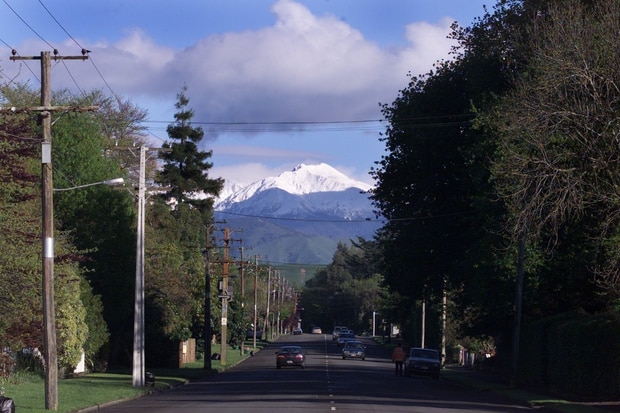
Late Spring snow on Mitre Peak, Tararua Ranges, Masterton, looking along Upper Plain Road. Photo / File
The awards, run by the Keep New Zealand Beautiful charitable trust, recognise and celebrate positive actions taken by communities in local and urban areas to protect and enhance their local environments.
The judges said Masterton's entry blew them away with its wide range of environmental and heritage conservation projects, and the strength of the community engagement "with numerous community groups working hard to make the city a safer and more beautiful community".
Speaking at the gala dinner last night, Masterton Mayor Lyn Patterson said it was a great result for the region.
"There's natural beauty all around Masterton and some outstanding parks and reserves, but the most beautiful thing is our wonderful community.
"This award is for our people and I'm proud to collect it on their behalf."
The application process involved submitting information on environmental action, community beautification, heritage conservation, community engagement, and historical beauty and tourism.
Each entry also had to put together a visual tour, made up of photos and/or video, of their town which illustrated the results of the hard work.
Masterton beat Napier and Tauranga to win the award, while Greytown was picked ahead of Raglan and Whirinaki.
The judges said Greytown was known for its "great food and sophisticated shopping, cute colonial cottages, historic trees and extraordinary chocolate".
"The small, owner-operated shops are high quality and distinctive, and Greytown offers the antithesis of big box shopping or bland and samey malls you find in many large centres," they said.
"This small town is definitely a gem of the Wairarapa."
Awards were also presented to sustainable schools, businesses and hardworking volunteers throughout New Zealand.
Heather Saunderson, chief executive officer of Keep New Zealand Beautiful, said the Beautiful Awards celebrated all contributions.
"From the most beautiful city, to the volunteer who singlehandedly collected over 700kg of rubbish this year, these awards recognise the places, businesses and people who do the right thing day in and day out to keep New Zealand beautiful.
"We are incredibly proud of the Beautiful Awards and look forward to continuing to grow these awards in 2018."
The judging panel said there were very strong submissions across all categories, which made selecting the winners incredibly hard.
The trust also runs the 'Paint Your Cabinet Beautiful' programme which aims to turn phone cabinets, that are often graffitied, into works of art.
FULL LIST OF AWARDS:
Full list of winners of the Keep New Zealand Beautiful Awards
Beautiful Towns and Cities
These awards recognise and celebrate beautiful towns and cities right across New Zealand. They acknowledge positive actions that have been taken by communities to protect and enhance their local environments. These prestigious awards encompass initiatives such as litter prevention, recycling, protection of the environment, preserving heritage, community action and leadership and environmental sustainability programmes.
Most Beautiful Suburb
Winner: Havelock North
Havelock North is the vibrant heart in the Hawkes Bay. Despite its growth in recent years, Havelock North has still managed to maintain its intimate village feel. A 'must visit' destination for anyone travelling to the province they call Wine Country.
Most Beautiful Small Town
Winner: Greytown
Known for its great food and sophisticated shopping, cute colonial cottages, historic trees and extraordinary chocolate. With its small, owner operated shops that are high quality and distinctive, Greytown offers the antithesis of big box shopping or bland and samey malls you find in many large centres. This small town is definitely a gem of the Wairarapa.
Most Beautiful Large Town
Winner: Feilding
The charming town of Feilding is where you will be met with red-bricked pavements and streets, stunning flower beds, and a warm elegance. The small town atmosphere offers an escape from the hustle and bustle, where walking into shops you are met with a friendly smile, and the kind hospitality that has earned this town the label of 'Friendly Feilding'.
Most Beautiful City
Winner: Masterton
Masterton blew away the judges with their wide range of environmental and heritage conservation projects, and the strength of their community engagement with numerous community groups working hard to make Masterton a safer and more beautiful community.
Community Awards
Community Environmental Initiative Award
This award honours innovative projects that have achieved extraordinary environmental results by harnessing the power of partnership.
Winner: Tuakau Clean Up & Planting Group
Each year the Tuakau Clean Up and Planting Group hosts a large clean up and planting day whilst engaging the community to take pride in their place, care for the environment, contribute to waste reduction and beautification of shared spaces.
Community Group Award
This award recognises and honours a not-for-profit community group that contributes to enhancing the environmental and social aspects of their region and additionally shows a strong sense of community spirit.
Winner: Wakatipu Reforestation Trust
The Wakatipu Reforestation Trust has grown locally eco-sourced seeds from their own nursery and empowered the community through Spring and Autumn plantings days to re-establish the native ecosystem of the Wakatipu Basin.
Sustainable School Award
The Sustainable Schools Award, proudly sponsored by New Zealand Couriers, annually honours a teacher, school or tertiary institution for commitment and practical action to implement sustainable practices and environmental projects, which enhance the school and/or community.
This award is sponsored by New Zealand Couriers and the recipient is awarded $2,000 to fund environmental educational activities in the winner's classroom, school or tertiary institution.
Winner: Morgan Educare
As part of their strategic plan, Morgan Educare have installed solar energy, set up recycling stations, established vegetable gardens, composting and worm farms and taken on many more other actions to work towards their environmental goals based around sustainability.
Kiwi's Choice
This award, proudly sponsored by Resene, recognises a favourite public spot in New Zealand based on its location, facilities, natural beauty, man-made beauty, cleanliness, popularity, and uniqueness.
Winner: Akaroa
Akaroa is a historic ocean side town, a short drive from Christchurch. It has beautiful and pristine water, with opportunities to go crab spotting in and around the rock pools on the water's edge as well as rare Hectors dolphins that swim in the harbour.
Best Loo
This award recognises the best public loo in the country based on the location, the facilities, cleanliness, interior, exterior and the surrounding environment of the loo.
Winner: Mt Hutt Ski Area
Set at an altitude of 1610m, Mt Hutt Ski Area toilets are not only modern, clean and accessible; but their clever design has successfully solved a vast array of existing problems.
Sustainable Business Awards
Recognising businesses that have purposefully and successfully made choices that are good for the future of New Zealand's environment.
Most Sustainable Small Business - less than 20 staff
Winner: Ecoware
Ecoware are contributing to a plastic free New Zealand vision by providing a wide variety of sustainable packaging solutions to a variety of networks and are proud to be New Zealand's first CarboNZero certified packaging company.
Most Sustainable Business
Winner: Ricoh New Zealand
Ricoh impressed the judges with their success in adopting an industry leadership approach to environmental sustainability throughout their operations; and in their focus on factoring environmental sustainability into all areas of their business.
Most Sustainable Business Project
This award honours New Zealand businesses who have achieved extraordinary results through an environmental or sustainability project in the past 12months.
Winner: Hawke's Bay Farmers Market
The Hawke's Bay Farmers Market has introduced a waste minimisation initiative meaning that all stallholders have changed their takeaway and tasting packaging to compostable options to promote sustainability of the market to the public.
Individual Awards
Young Legend Award
The Young Legend Award honours an outstanding volunteer under the age of 18. This exceptional young man or woman will have demonstrated remarkable leadership and outreach in his or her community through work in the areas of litter prevention, waste reduction, recycling promotion and beautification.
Winner: Joanna Tao
Joanna has a passion for the environment and is dedicated to supporting the various organisations within New Zealand and worldwide, that encourage action in the way of environmental improvements.
Tidy Kiwi Award
The Tidy Kiwi Award recognises and rewards an individual who has distinguished himself or herself as truly extraordinary and serves as an inspiration to us all. This award honours outstanding and exceptional leadership in litter prevention, waste reduction, recycling and beautification activities.
Winner: Tom Carr
Every day, Tom works on cleaning up his local community on his way to and from work. It is estimated that since last year he had picked up about 700kg of rubbish during his 2.5-kilometre walk each day.
Ruud Kleinpaste Award
This award is in honour of Ruud Kleinpaste and is given to the Keep New Zealand Beautiful member whose efforts go above and beyond to positively enhance the organisation's mission and values.
Winner: Linda Keall
Linda works tirelessly to galvanise the local volunteer base in Christchurch; coordinating various logistics for graffiti eradication initiatives, clean-up events, educational programming as well as community led projects. Linda works to promote a cleaner, more beautiful environment within Christchurch, and to raise the level of awareness of what the individual can do to improve his or her community and reduce litter.
(Source: NZ Herald, Jake Beleski)
21/10/17 - Immigration, trade and marijuana to be considered by Labour and NZ First
New Zealand is poised to slash immigration, rethink trade deals and vote on legalising marijuana under a new government that takes office next week.
After nine years of conservative rule, liberal Jacinda Ardern was confirmed as the nation's next prime minister on Thursday, following negotiations after a close September election.
Ardern's Labour Party will be joined in a coalition by the small, nationalist New Zealand First party and will also get support from the liberal Green Party.
The incoming government has not yet released details of its plans, but here are some things that could change based on the coalition's campaign promises and comments from Ardern.
MARIJUANA REFERENDUM
Ardern said yesterday the country would hold a referendum on whether to legalide recreational marijuana at some point over the next three years.
She didn't say whether she favored legalisation but said the current system wasn't working well.
"I've always been very open about the fact that I do not believe that people should be imprisoned for personal use of cannabis," Ardern said. "On the flip side, I also have concerns around young people accessing a product which can clearly do harm and damage to them."
Ardern said she wanted to hear the view from New Zealanders and figure out the correct wording for the referendum before taking a stance.
IMMIGRATION
Both Labour and New Zealand First want to slash immigration numbers.
Labour says it plans to reduce the number of immigrants by up to 30,000 each year, including up to 10,000 students who it says are studying courses that have little merit.
Labour says it also plans to strengthen the tests for work visas to ensure immigrants aren't taking jobs New Zealanders could perform.
New Zealand First has advocated for even more drastic immigration cuts. In the year ending September, a net 71,000 people moved to New Zealand, adding about 1.5 percent to the population of nearly 5 million people.
TRADE
Both Labour and New Zealand First say they want to renegotiate a free-trade deal that 11 Pacific nations including Japan and Australia are considering signing.
That could delay the Trans-Pacific Partnership or result in New Zealand pulling out.
The US pulled out in January after President Donald Trump followed through on a campaign promise to withdraw.
New Zealand had announced just two months ago it had approved a mandate for the country to push ahead with negotiations.
Labour says it opposes the sale of farms, homes, and certain infrastructure to overseas buyers.
It says the previous government traded away those rights in the proposed deal. Other existing and proposed trade deals could come under scrutiny for similar reasons.
HOUSING
Labour says it wants to ban foreign speculators from buying New Zealand homes and also wants to build 100,000 affordable homes over 10 years, including 50 percent in the main city of Auckland.
Both measures are aimed at curbing skyrocketing home prices, which have made houses unaffordable for many young people looking to buy.
Labour also says it plans to stop the sale of government-owned homes, reduce homelessness and improve conditions for renters by imposing stricter rules on landlords.
New Zealand First says it wants to ensure only citizens and permanent residents can buy freehold land.
TAX AND SPENDING
Labour says it plans to spend billions of dollars more on health and education.
It also plans to boost the minimum wage and increase help for low-income families, as well as reduce the government's debt over time.
It says it will achieve this by eliminating tax cuts that had been planned by the previous government and by taxing multinational companies more.
The party also plans to add a new tax for visiting tourists. New Zealand First says it wants to crack down on corporate tax avoidance and add a new tax on export income.
CLIMATE CHANGE
Labour wants to set legally binding targets to reduce greenhouse gas emissions.
The party wants the nation to reach zero net emissions by 2050 by planting extra forests to absorb the greenhouse gasses it emits.
It also plans to establish an independent climate commission.
Nearly half of New Zealand's greenhouse gasses come from agriculture, which also drives the economy.
Any moves that increase costs for farmers could run into strong opposition, although Labour says it will make changes gradually.
Labour says it wants to rework an existing emissions trading scheme while New Zealand First says it wants to replace it.
Ardern said her government "will be absolutely focused" on the challenge of climate change.
(Source: Associated Press)
10/10/17 - Strong economy delivers $4.1 billion surplus
The New Zealand Government has achieved its third fiscal surplus in a row with the Crown accounts for the year ended 30 June 2017 showing an OBEGAL surplus of $4.1 billion, $2.2 billion stronger than last year, Finance Minister Steven Joyce says.
“The 2016/17 Crown accounts are a direct demonstration of the hard work of New Zealanders since the Global Financial Crisis and the benefit of a strong economic plan that is delivering consistent growth,” Mr Joyce says.
Core Crown tax revenue was $75.6 billion for the 2016/17 year, up 7.4 per cent from the previous year with all major tax types increasing.
“The 12.3 per cent growth over last year in company tax, a 7.1 per cent growth in GST, and a 7.4 per cent growth in personal income tax, are a direct consequence of the confidence and growth of Kiwi companies and the growth in jobs.”
Core Crown tax revenue growth of $5.2 billion outpaced core Crown expenditure growth of $2.4 billion.
The final OBEGAL result for the year is $363 million better than predicted by Treasury at the time of the Pre-election Fiscal Update, largely due to core Crown expenditure being $502 million less than forecast.
“This better result should be seen as a one-off. Treasury advises that much of this expenditure reduction reflects timing differences and is likely to reverse out in the years ahead,” Mr Joyce says.
The country’s net debt has reduced in nominal terms by $2.4 billion from last year, to $59.5 billion. Net debt has dropped to 22.2 per cent of GDP.
“This is the first time net debt has reduced in actual dollar terms since the GFC and the Christchurch earthquakes,” Mr Joyce says. “It’s a significant milestone in the country’s economic recovery from those twin shocks.”
Mr Joyce says that the 2016/17 full year result should be interpreted with caution, and not seen as automatically flowing through into higher surpluses than forecast in the years ahead.
“Treasury has based its forecasts on current economic settings and some reasonably solid growth predictions for the years ahead. A number of commentators have noted a softening of growth indicators in recent days.
“The Government’s future surpluses will be needed to meet the cost of the significant investments we have committed to as part of the next four Budgets including the Government’s $32.5 billion infrastructure programme.
“We also need to keep reducing debt over time to prepare for the next rainy day event.”
(Source: Beehive, Steven Joyce, 5 OCTOBER, 2017)
09/10/17 - NZ will come to a ‘grinding halt’ if migration cut too drastically
Employers and Manufacturers Association boss Kim Campbell has delivered a blunt warning to political parties as coalition talks get under way this week in Wellington: Tread lightly around immigration.
New Zealand First leader Winston Peters and his team of negotiators began official talks with Labour and National yesterday and those talks have continued today and are expected to run into the night.
Mr Campbell has raised concerns that some parties might be looking to make drastic changes to immigration.
He specifically calls out NZ First’s policy, which aims to reduce the net number of immigrants coming to New Zealand to 10,000 a year.
“If the number does become a reality, we’re going to see New Zealand coming to a grinding halt pretty quickly,” Mr Campbell says.
The most recent net migration data reveals the difference between immigration and emigration numbers eased in August to a net gain of 5490 people, down from 5800 people in July – adding up to 72,100 new migrants in the year to August.
But it’s not just NZ First he’s calling out.
Under Labour’s immigration policy, it is estimated there will be 20,000-30,000 fewer net migrants a year.
Labour plans on limiting visas for “low-value” education courses, removing work visas for students without a job offer for lower level qualification graduates and plans to regionalise the occupation list to ensure employers higher Kiwi workers first.
Earlier this year, the government changed what it will define as a “lower-skilled” employee and will restrict lower-skilled migrant employees to a three-year visa with a stand-down period before becoming eligible for a new visa.
Mr Campbell, who described the first round of National’s changes as “fine tuning” (before it further refining the rules in August), says it’s important to remember where New Zealand was not so long ago in this very debate.
“It was only four and a half years ago that we were pleading with people to come live in New Zealand.
“The old joke, about the last person leaving Auckland should turn the lights off, was almost a reality.”
He acknowledges that New Zealand’s growing population, largely due to immigration, is putting pressure on infrastructure.
But he says that is “just growing pains.”
“I would rather have growing pains than declining pains, where we’re just arguing over a declining pie,” he says.
“Let’s hope when people look at the realities on the ground, they will come up with policies that will at least sustain the growth.”
(Source: NBR, Jason Walls)
10/10/17 - Fact check: New Zealand has the fastest growing population in OECD
NZ First leader Winston Peters' policies include cutting immigration, banning foreign buyers from the housing market, and moving Ports of Auckland. Is that what Auckland needs? Employers and Manufacturers Association chief executive Kim Campbell joins us to discuss how a new government might impact New Zealand's main city.
The word immigration is likely to spark a reaction, depending on which side of the welcoming gate you stand.
On Sunday, Duncan Garner faced a torrent of abuse, including being labelled a racist, following a column calling for New Zealand to curb immigration.
Winston Peters and his party, NZ First, want to cut the number of people coming into the country - with their policy likely to be on the table in coalition negotiations this week.

Record migration levels have been praised as a sign of strong economic growth, but there are fears about how the influx of people will put pressure on public services and infrastructure.
And as the attention on immigration fuels fierce debate online, we decided to put some of the common claims made by politicians and social commentators under the microscope.
NEW ZEALAND'S MIGRANT COMMUNITY IS GROWING FASTER THAN EVER
Garner said his column should not be viewed as racist, but definitely "outwardly pro-NZ".
This year's net gain of migrants was 72,000, and New Zealand's population grew by 100,400 to the June 2017 year.
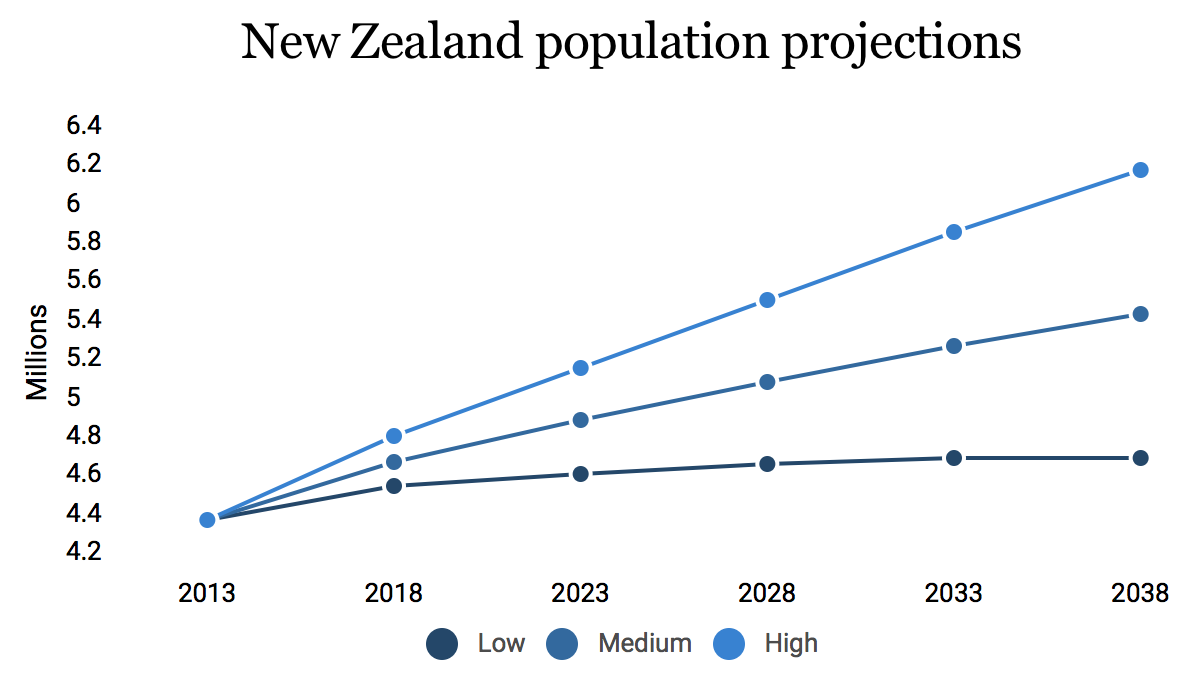
Stats NZ produces population projections ranging from low to high, depending on different rates of fertility, mortality and migration. The medium projection - considered to be the most plausible - is for the population to be 5.5 million by 2038. The 6.3m figure is the 'high' projection and assumes there is high fertility rates, low mortality rates and high net migration. Under the 'low' projection the population would rise to 4.8m by 2038.
New Zealand's population grew at 2.1 per cent in 2016. This is the fastest rate in the past few years, but looking back just to 1960 (which is how far back available data goes) there have been several years in which the rate of growth matched or exceeded that mark. Including 2003 when it was 2 per cent, in 1974 it was 2.1 per cent and in 1962 it was 2.5 per cent. On average, since 1960 the population has grown at 1.16 per cent per year.
New Zealand population projections
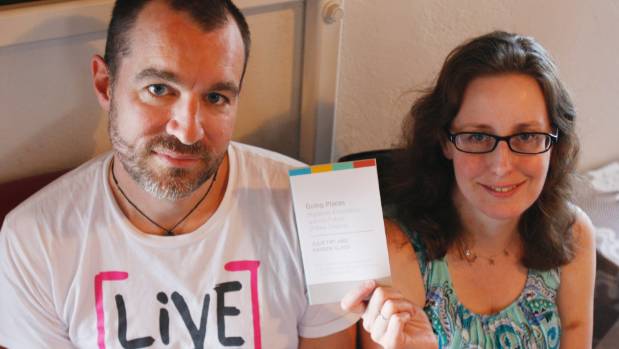
Economist Hayden Glass with his co-author Julie Fry, and their book Going Places.
HOW DOES THAT COMPARE WITH OTHER COUNTRIES?
New Zealand population change (%)
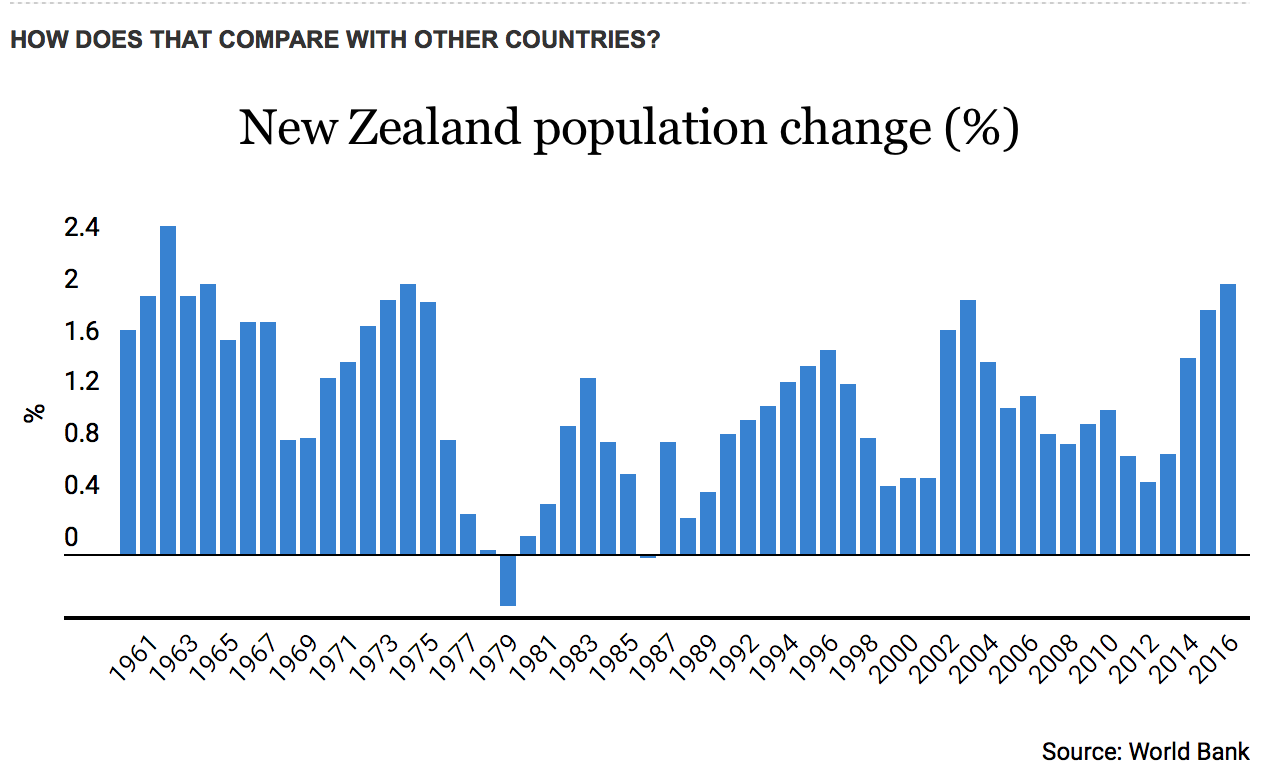
A population growth rate of 2.1 per cent made us the 59th fastest growing country in the world in 2016. Most of the countries with faster rates of growth are in Africa. New Zealand does have the fastest rate of population growth amongst the OECD countries we generally measure ourselves against. Only Ireland (2.04 per cent) comes close.
TOO MANY MIGRANTS CUTS LOCAL WAGES
Not according to Hayden Glass, an economist and co-author of Going Places, a book about the economic contribution of migration to and from New Zealand.
"It's often talked about that immigration has an effect on wages, which makes sense as migrants increase supply," said Glass.
"But when you look at the economic evidence … we found that it does not impact local wages."
How could this be? While they add to the labour supply, migrants also increase the demand, he said.
WHAT IS THE MAKEUP OF OUR MIGRANT POPULATION?
In the year to June 2017, net migration was 72,305. The countries that contributed the most to this figure were China (10,351), India (7409) and the United Kingdom (6728). Followed by South Africa, the Philippines, France and Germany.
"The vast number of visitors to New Zealand are tourists," said Glass.
"The second biggest are temporary workers who are here to do a job, and the third biggest are students. After that it's permanent residents, who are selected effectively on having job or being highly skilled."
A big contributor to the increase in net migration in the past three years has been less Kiwis leaving for overseas and more returning home. For most of this century we lost at 20,000 New Zealand citizens (net), in the past three years that has fallen to the point where arrivals and departures of New Zealand citizens almost cancel each other out.
Glass believes this is the "other piece of puzzle".
Kiwis are coming home and fewer are leaving
Permanent and long-term arrivals and departures of New Zealand citizens
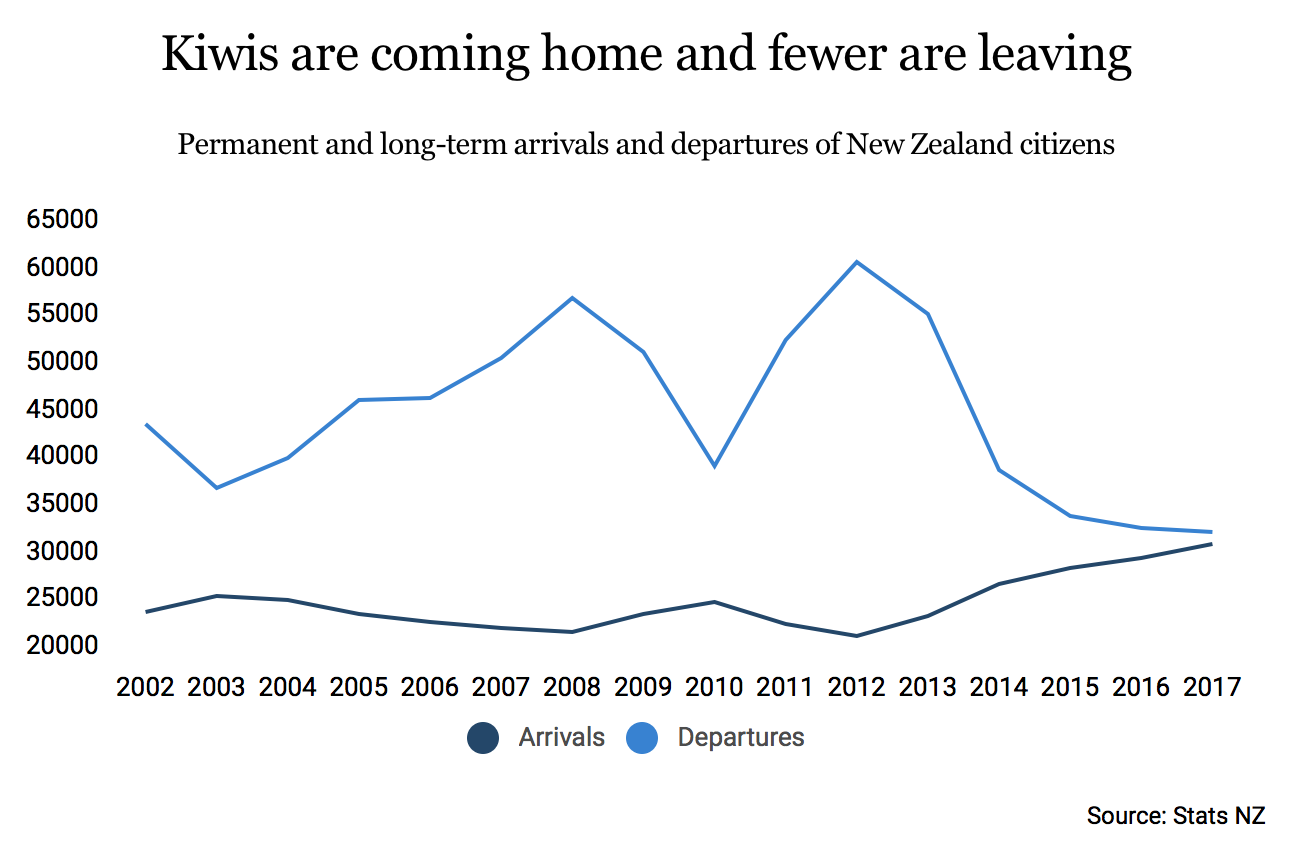
"Departures have been falling since 2012, and with fewer people leaving it's making it hard on immigrants who traditionally filled that gap."
Talking about immigration as a whole is difficult, Glass said, there are a lot of moving parts including different types of visa.
VISA TYPES
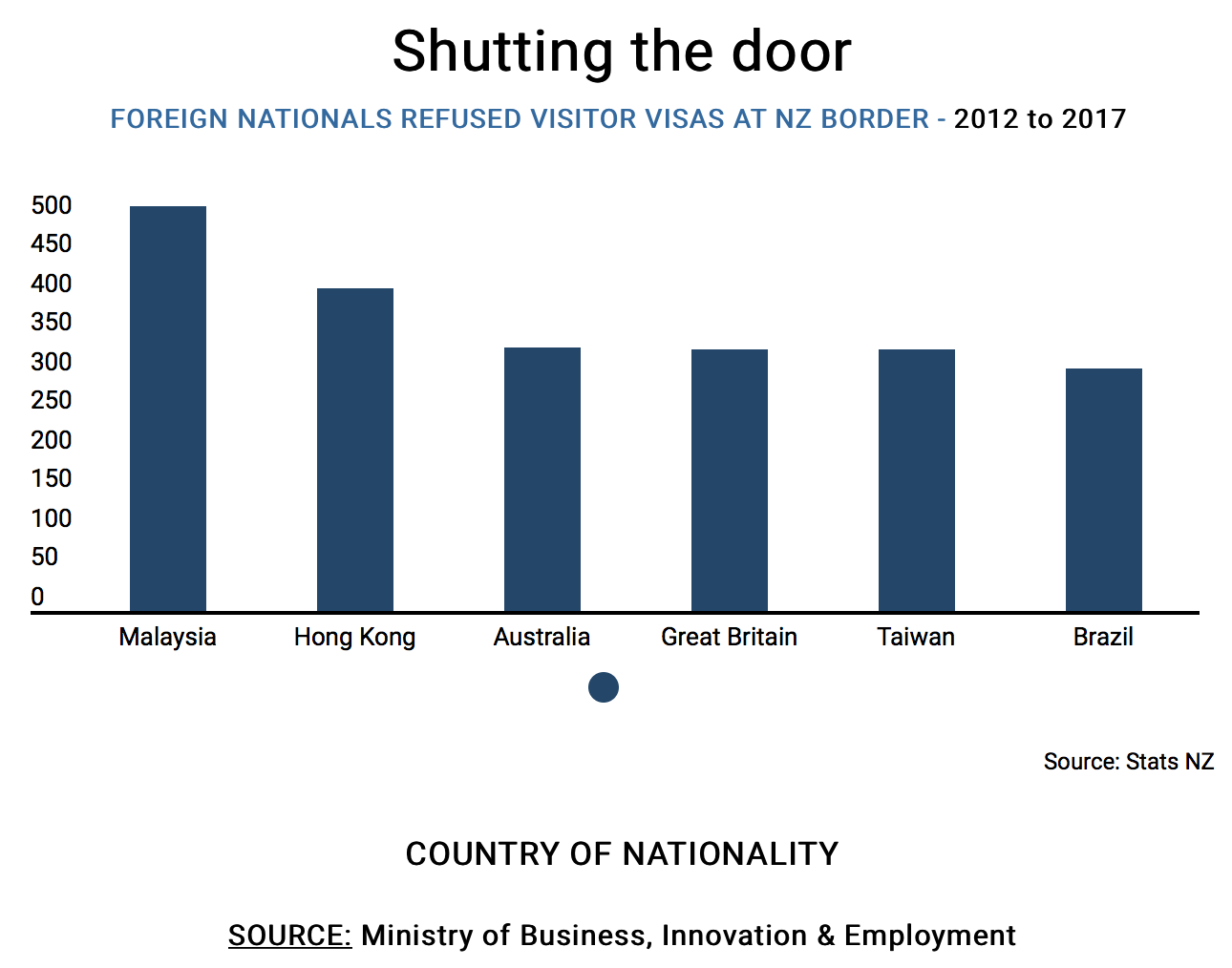
Looking at just the five countries which provided the biggest net gain of immigrants in 2017 - China, India, UK, Philippines and South Africa - there is a clear divide in the types of visas people from different countries are entering on. Immigrants from the UK, South Africa and Philippines are most likely to obtain working visas, while Chinese and Indian immigrants are more likely to be students.
"International students are more like tourists, and they might work a bit while they are. They are long term consumers of expensive education services.
Shutting the door
FOREIGN NATIONALS REFUSED VISITOR VISAS AT NZ BORDER - 2012 to 2017
"We could attract more of them, hanging on to good ones, and some argue that any student who gets an advanced degree in New Zealand should give them a passport so those skills are kept here."
Many of the country's top companies have joined recruitment drives that search the globe, hoping to plug New Zealand's talent gap.
"Do we want to be open to the world or not? Historically we do," said Glass.
"I don't know that economics is the most important point when it comes to immigration, it's more about identity and about how see ourself."
(Source: Stuff, ANDY FYERS AND BRAD FLAHIVE)
09/10/17 - The best place to work and buy a home in NZ
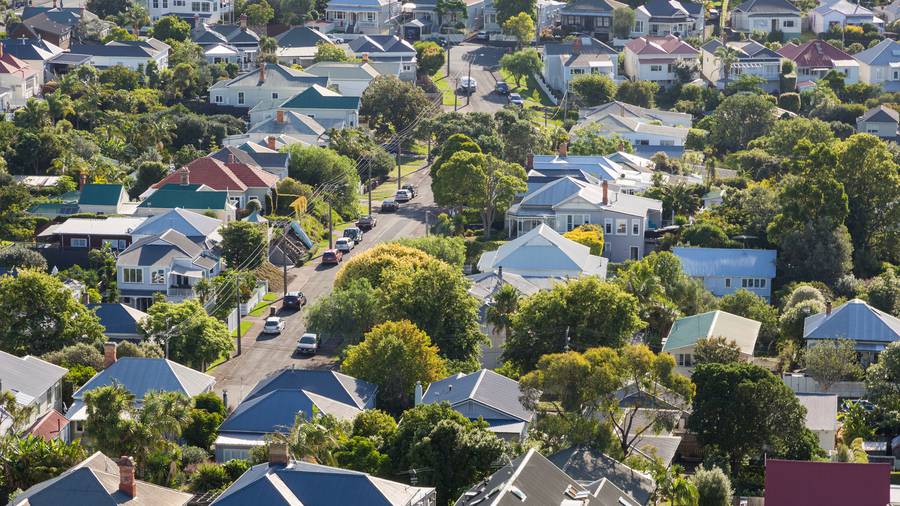
New Zealand has been at the forefront of a global phenomenon. Photo / 123RF
In Taranaki, pay increases have just about kept up with house prices. In Auckland, workers are far behind.
Taranaki has come out tops as the region where the rate of wage growth has best kept up with the increase in house prices.
Analysis by the Weekend Herald shows median weekly earnings in the Taranaki region grew 19.88 per cent to $959 during the four years from June 2013 to June 2017, while the average house price grew 20.3 per cent to $285,967.
That compares with the Auckland region - the worst performer on this measure - where wage growth was just 14.51 per cent to $1010 a week, compared to house price growth of 63.45 per cent to $1.05 million.
Nationwide median wage growth was 14.71 per cent across the four-year period to $959, compared to average house price growth of 44.83 per cent to $639,051.
The data highlights the extent to which economic progress in the current environment has been weighted towards those with assets.
Wage inflation is typically benchmarked against the consumer price index, which does not include house price inflation.
Using more traditional macro-economic measures, Taranaki's economy has been one of the poorest performers over the past four years.
The ASB Regional Economic Scorecard - which measures performance based on employment, wages, house prices, retail sales, new car sales and construction - has placed the region near the bottom of its rankings.
In 2016 it was the lowest ranked region as it suffered from the slumps in the dairy and oil and gas sectors, which dominate its economy.
Other regions where wage growth has also maintained some proximity to house price growth include Southland (where house prices rose 19.6 per cent compared to wage growth of 14.27 per cent), Canterbury (housing up 23.1 per cent and wages 14.05 per cent) and Manawatu/Wanganui (housing up 25.35 per cent and wages up 15.07 per cent).
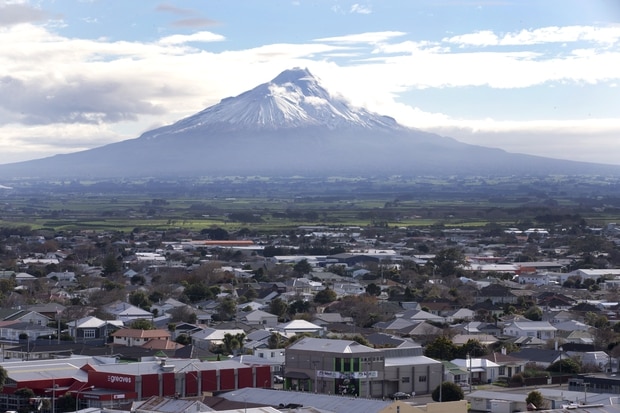
Taranaki's rate of wage growth has best kept up with the increase in house prices. Photo / Mark Mitchell
Meanwhile, in Auckland and other upper North Island regions the disparity between wage growth and house prices clearly illustrates the problem for those attempting to grow wealth based entirely on weekly earnings.
After Auckland, the regions with the greatest gap between house price growth and median wage growth were the Waikato (house prices grew at 51.66 per cent and wages just 14.9 per cent), Bay of Plenty (51.37 per cent and 12.48 per cent) and
Northland (48.73 per cent and 12.96 per cent).
All of these regions have experienced migration from Auckland and increased investor interest as Auckland property prices peaked.
Wage growth has become the focus of intense scrutiny in economics in the past few years as it failed to accelerate as employment rates have recovered in the wake of the global financial crisis.
Unemployment in New Zealand is sitting at 4.8 per cent - which economists regard as near to full employment, from a practical point of view.
New Zealand's employment rate - the proportion of working-age people in a job - is sitting above 66 per cent, which is higher than the country's major trading partners.
But despite that, wages remain nearly static, rising by just 1.6 per cent in the year to March 2016 and 1.7 per cent in the year to March 2017.
Assets (property and shares), on the other hand, have soared in value as record low interest rates have pushed investors to seek alternatives to bank deposits.
The rapid rise in sharemarkets and property prices has been a global phenomenon, of which New Zealand has been at the forefront.
From June 2013 to June 2017, New Zealand's NZX50 sharemarket index soared by 67.3 per cent.
The Weekend Herald analysis compared the rise in property values - as measured by Quotable Value - in the same areas which
Statistics NZ uses to track regional growth.
(Source: NZ Herald, Liam Dann)
26/09/17 - Change of process for Entrepreneur Work Visa (Interim) Applications
You are receiving this email because you represent one or more applications for an Entrepreneur Work Visa (Interim) which is awaiting allocation to a case officer in the managed queue at the Business Migration Branch.
As you may be aware, this queue is currently subject to a significant backlog. Applications are currently taking around 10 months for allocation to a Business Immigration Specialist. We acknowledge that this situation is unacceptable and that we cannot continue operating with such significant wait times. Market demand for this category has grown and we have therefore undertaken a process review to ensure correct processes are being followed.
As a result of this process review, the Business Immigration Specialists processing the Entrepreneur Work Visa (Interim) applications will be adhering to the instructions located at E7.15 (included below for your reference). Entrepreneur Work Visa (Interim) applications are applications for temporary visas, and therefore (unless explicitly directed by instructions) the generic instructions which apply to them are the generic temporary entry instructions. A consistent adherence to the correct instructions for every application across Immigration New Zealand is necessary in order to uphold the principles of fairness and natural justice.
The principles of fairness include considering whether an applicant is informed of information that might harm their case (often referred to as potentially prejudicial information). There is a definition of potentially prejudicial information (PPI) for principal applicants who are outside of New Zealand at E7.15.1:
E7.15.1 Applicants outside New Zealand.
For the purpose of assessing an application for a temporary entry class visa from an applicant who is outside New Zealand, PPI is factual information or material that:
- was not obtained from the applicant or the applicant’s authorised representative or agent; and
- is not publicly available, or that the applicant is not necessarily aware of; and
- will or may adversely affect the outcome of an application; and
- the applicant has not previously had an opportunity to comment on.
Note: The submission of false or misleading information by an applicant or their agent is not potentially prejudicial information as that information has been obtained from the applicant or their agent.
Effective 21/11/2016
This means that, if a principal applicant is outside of New Zealand, unless a decision is being based on information which does meet the definition of PPI, we will not be informing you of this information prior to making a decision on the application. Please note that information must meet each of these above criteria in order to be considered PPI.
For those principal applicants who are onshore, there will be no change to our current process.
Whilst this may not apply to the applications submitted by you or your organisation, we have noted an increase in applications which clearly do not contain evidence which demonstrates that the applicants meet the relevant immigration instructions. We have concerns that some representatives may be waiting to receive a PPI letter to tell them what information INZ expects them to submit. We do not consider this to be acceptable, and we believe that by following the correct process we can spend more time on the quality applications which are submitted by the majority of representatives, reducing wait times and providing a better level of service to all our customers.
While Immigration New Zealand must strive to ensure its decisions are consistent (A1.5, effective 29 November 2010), the fact that we may have allowed comment on non-PPI material in other applications does not provide a justification for a process outside of the instructions.
We do note that, previously, prior to a decision being made you have been afforded an opportunity to comment on information even when it was outside of the above definition of PPI material. Because of this, out of fairness we have elected to afford you the opportunity to send an update to your clients’ applications. We note that for the majority of agents who have submitted well-prepared applications, you will not need to do anything. However, in case you feel that there is any missing information, or any information which demonstrates that your client does not meet the relevant instructions, please send any updates to our office by 17 October 2017.
The address to which you will need to send any updates is:
Business Migration Branch (BMB)
Level 3, 256 Lambton Quay
Wellington 6011
Please clearly reference the application number for any information that you send.
After 17 October 2017, we will continue assessing the offshore Entrepreneur Work Visa (Interim) applications in the managed queue using the E7.15.1 definition of PPI to inform our process for principal applicants who are outside of New Zealand. New Entrepreneur Work Visa (Interim) applications received will also be assessed using this definition.
(Source: BMB)
If you have any questions about this process, you can send enquiries to This email address is being protected from spambots. You need JavaScript enabled to view it..
15/09/17 - Deportations from New Zealand at a four-year high
The number of people deported from New Zealand has hit a four-year high.
Figures released from Immigration New Zealand (INZ) show there were 747 deportations in 2016-17, up 205 from the previous year.
It was also the highest number since 2012-13, when 791 people were deported.
Last week Colin Bouwer, the Dunedin psychiatrist who killed his wife with poison, was granted parole on the condition the 67-year-old be released into police's custody for "immediate deportation from New Zealand". That was expected to occur on October 11, allowing time for travel arrangements to his home country of South Africa to be made.
Removal and deportation cost the department $1.7 million in 2016-17 – the highest in five years.
Figures on how much deportees reinbursed the Government for their removal were unavailable, but deportees were made aware of the costs beforehand.
An INZ spokesman said anyone staying in New Zealand longer than their visa allowed was unlawfully in the country and could be liable for deportation.Those people might be allowed more time to depart voluntarily or they had to get a new visa. INZ could serve a deportation order once their appeal rights expired.
Those engaged in criminality were the highest priority for deportation. The vast majority of those unlawfully in New Zealand were not criminals and the department assisted them towards "voluntary departure", the spokesman said.
The number of voluntary departures for 2016-17 was 1437, up 83 from the previous year, and the highest number since 2012-13.
(Source: Stuff, Catholic News NZ)
Covid 19 Notice
As the impact of the coronavirus continues to evolve, we face this unprecedented situation together. The pandemic is affecting all of us. At Terra Nova Consultancy Ltd we wish to reach out and update you on how we are addressing it. Our top priority is to protect the health and safety of our employees, clients, and our communities. Our focus on customer service remains at the center of everything we do, and we are fully committed to continue to serve you with our services, and striving to provide our services without interruption.Please listen and act upon the advise given by the Government, only in that way will we together be able to combat this challenge. And as always, stay healthy and keep safe.
TNC E-books
The Terra Nova e-book page contains publications in e-book and e-news format containing comments and reviews from Terra Nova Consultancy Ltd, and other contributors, that relate to a number of issues from immigration to operating a business.
Some of the Terra Nova e-books e-book and the Terra Nova e-news issues we believe may be quite helpful for prospective immigrants.
Check back regularly to find new editions of our Terra Nova e-book and Terra Nova e-news range.
Quick Links
Translate this site
Contact Details
Terra Nova Consultancy Ltd
165A Old Railway Road
Kumeu
New Zealand
Please arrange visit by appointment.
Mobile: +64 275 706 540
Postal Address:
as above
Licensed Immigration Adviser
Johannes Petrus (Peter) Hubertus Cornelis Hendrikx

License number: 200800214
Is your Immigration Adviser
licenced by the NZ Government?
Click here for details www.iaa.govt.nz